



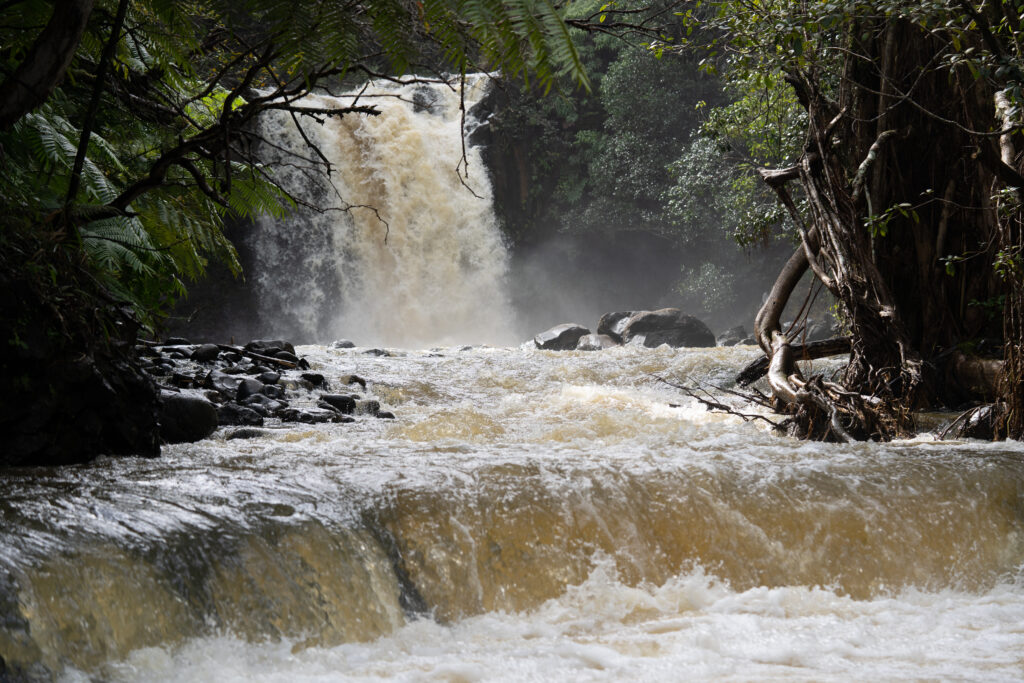
From lush rainforest trails to breathtaking volcanic ridgelines, hiking in Maui is a year-round adventure. But as any seasoned local or guide will tell you—understanding Maui’s weather patterns is key to a safe, enjoyable trek. Whether you’re chasing waterfalls in Hāna or sunrise views at Haleakalā, this guide will help you hike smart, plan right, and experience the best of Maui’s great outdoors.
Quick Overview: Maui Weather by the Numbers
- Temperature range: 65°F (18°C) to 85°F (29°C) year-round
- Rainy season: November to March
- Dry season: April to October
- Best hiking months: April, May, September, and October
- Microclimates: Yes! Maui has at least 17 recognized microclimates
Windward vs. Leeward: Why It Matters for Hikers
When planning a hike on Maui, one of the most important—and often overlooked—factors is the island’s windward-leeward divide. This natural weather pattern shapes everything from trail conditions to what you’ll see (or not see) along the way.
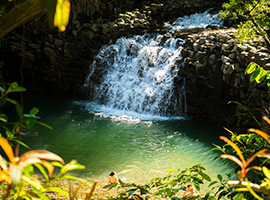
Windward Wet Hike
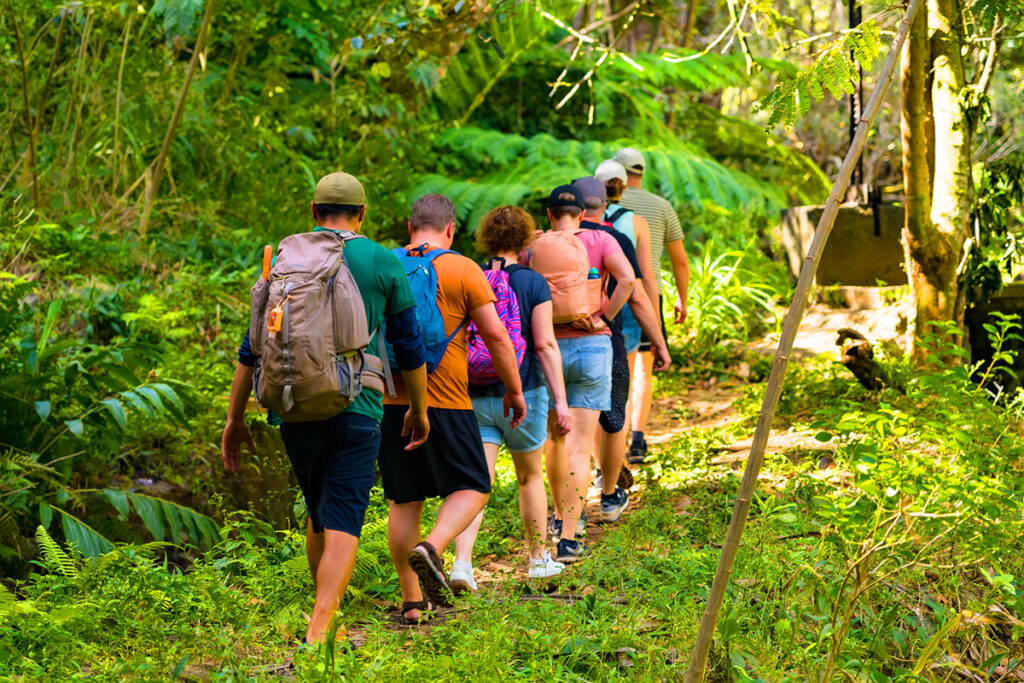
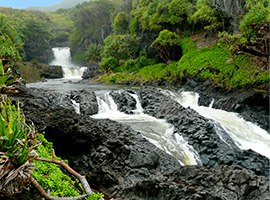
Maui is primarily influenced by northeast trade winds, which blow consistently across the islands for much of the year. These winds push moist ocean air up against the windward (northeast) slopes of the island—think areas like Hāna, ʻĪao Valley, and the lush flanks of Haleakalā. As the air rises, it cools and condenses, creating frequent cloud cover and rainfall. This is why the windward side is so green, vibrant, and dense with rainforest vegetation.
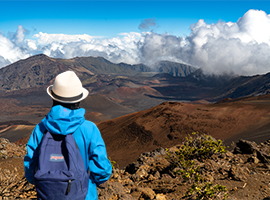
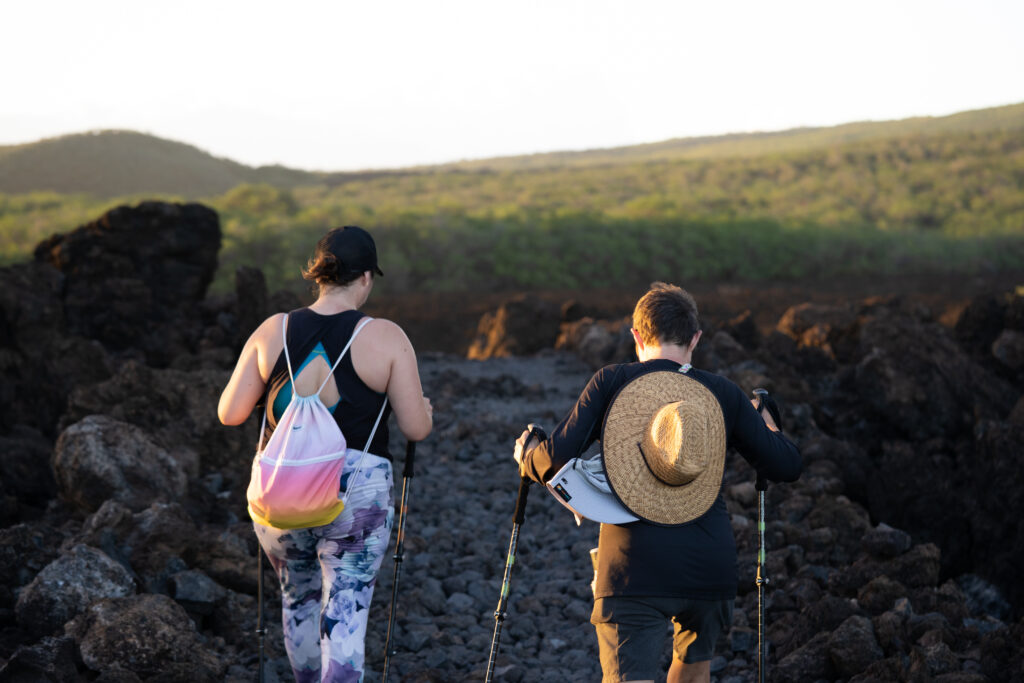
On the flip side, the leeward side—which includes areas like Kīhei, Lāhainā, and much of South and West Maui—sits in the “rain shadow” of the mountains. As the trade winds lose their moisture over the uplands, they descend on the leeward slopes as dry air. These areas see far less rainfall, often enjoying clear skies and consistent sunshine. This is why Maui’s beaches, resorts, and many popular dry hikes are clustered on the leeward (southwest) side.
Leeward Dry Hike:
Why This Matters for Hikers:
- Trail conditions vary dramatically. A leeward trail might be dusty and hot, while a windward trail just 30 miles away could be muddy and misty.
- Packing and prep change by region. You’ll want sunscreen and lots of water for leeward hikes, and a rain jacket and bug spray for windward ones.
- Timing matters. Mornings are generally clearer on both sides, but the windward side tends to cloud over faster and stay wetter longer.
Understanding this dynamic helps you plan better, pack smarter, and choose trails that match your comfort level and hiking goals.
The Best Time to Hike in Maui
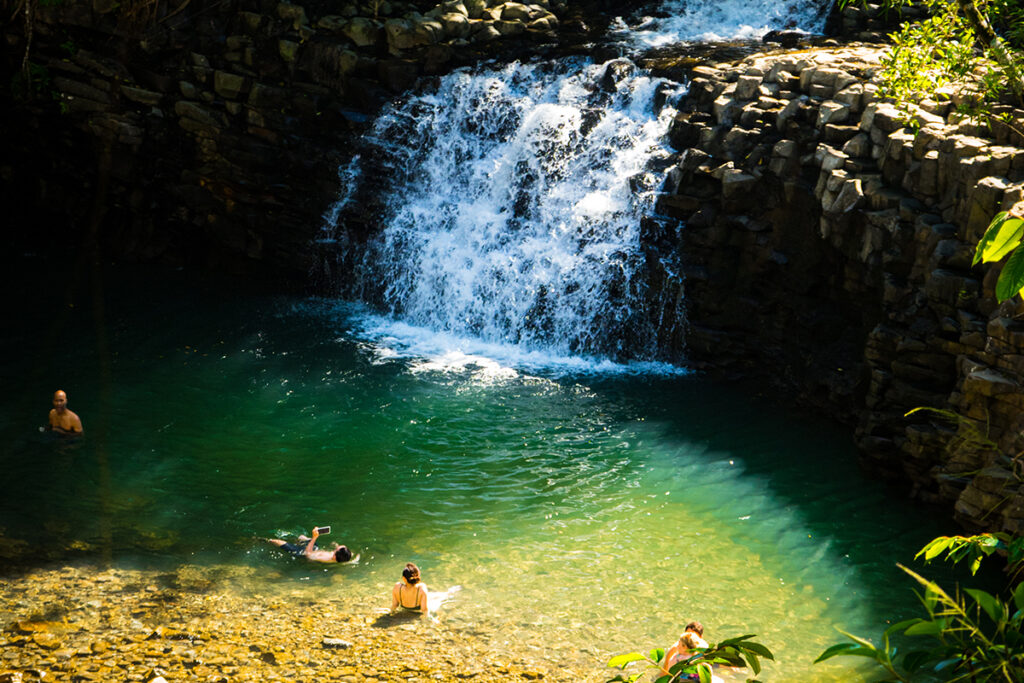
Dry Season (April–October): Ideal for Most Hikes
- What to expect: Sunny skies, low humidity, drier trails
- Best for: Waterfall hikes like Twin Falls, Pipiwai Trail, Waihe’e Ridge Trail
- Watch out for: Intense mid-day sun. Start early to avoid heat exhaustion
Wet Season (November–March): Lush, but Slick
- What to expect: Intermittent rain, cooler temps, muddy trails
- Best for: Haleakalā Crater (check weather), La Perouse, Lahaina Pali Trail
- Watch out for: Flash floods in gulches and stream crossings—always check alerts before you go
Understanding Maui’s Microclimates
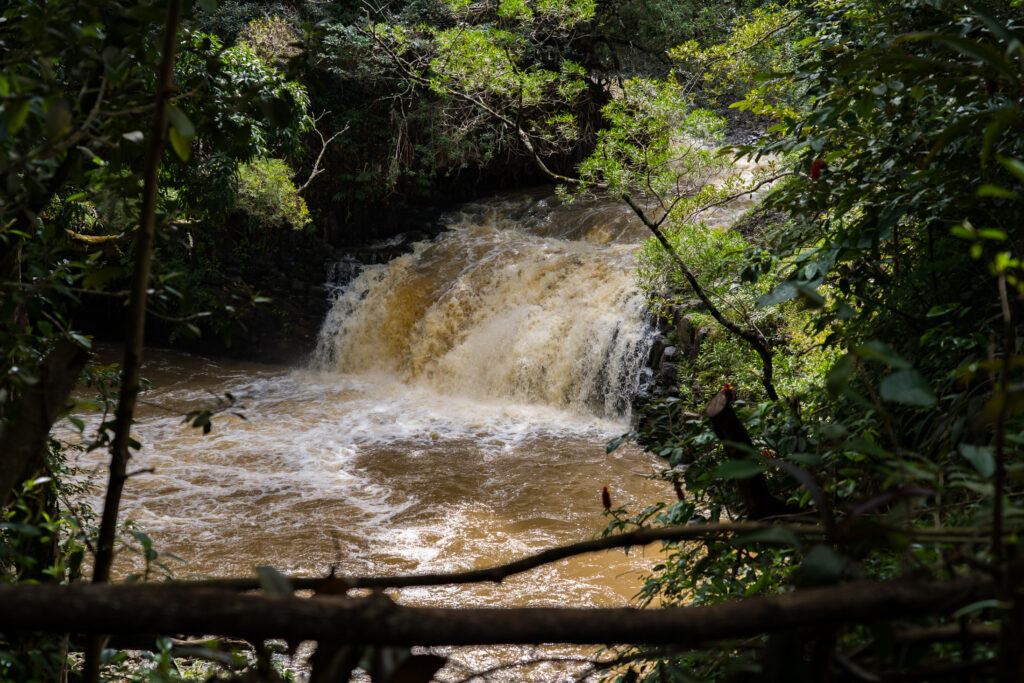
One of Maui’s magic tricks is how quickly the weather can change—just drive 20 minutes and you might go from sunny to misty rainforest.
| Region | Climate | Best Hikes |
|---|---|---|
| West Maui Mountain | Rainy & lush | ʻIao Valley, Waiheʻe Ridge |
| Hāna/Haleakalā’s windward slopes | Wet & jungle-like | Pīpīwai Trail, Waikamoi Trail |
| South Maui (Kīhei/Wailea) | Arid & sunny | La Perouse Bay, coastal walks |
| Upcountry (Makawao/Kula) | Cooler, with afternoon showers | Hosmer’s Grove, Polipoli Springs, Makawao Forest |
| Haleakalā Summit | Cold & dry | Sliding Sands Trail (starts at ~10,000 ft!) |
Sunrise, Sunset, and Daylight Considerations

- Sunrise hikes like Haleakalā Crater are epic, but temperatures can drop below freezing. Dress in layers!
- Sunset hikes on the west side offer golden-hour glow. Just pack a headlamp—Hawaiian nights fall fast.
- Daylight hours vary by just 1.5 hours annually. Expect ~11 hours in winter and ~13.5 in summer.
Weather Hazards to Know Before You Go
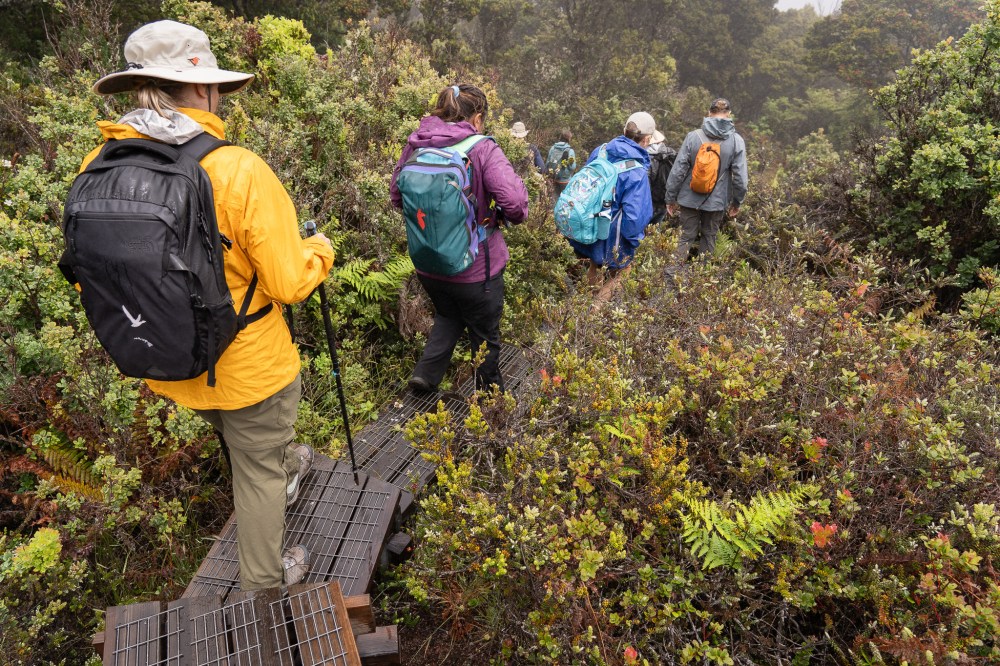
Flash Floods
Hawaiian rainstorms can be sudden and intense. Always heed posted warnings and avoid hiking near gulches and streams after heavy rain.
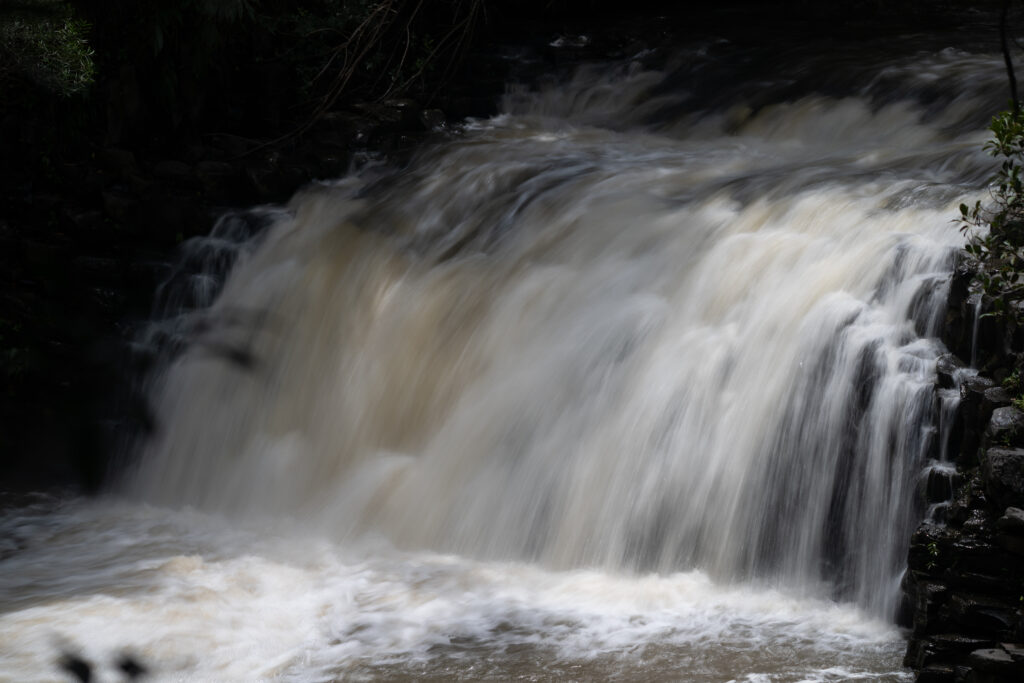
Trail Closures
Check with:
- National Park Service – Haleakalā: nps.gov/hale
- Hawaiʻi Department of Land and Natural Resources (DLNR): dlnr.hawaii.gov
Vog (Volcanic Smog)
Rare in Maui but can drift over from the Big Island during south winds. Can affect air quality for sensitive groups.
What to Pack for Weather-Savvy Hiking
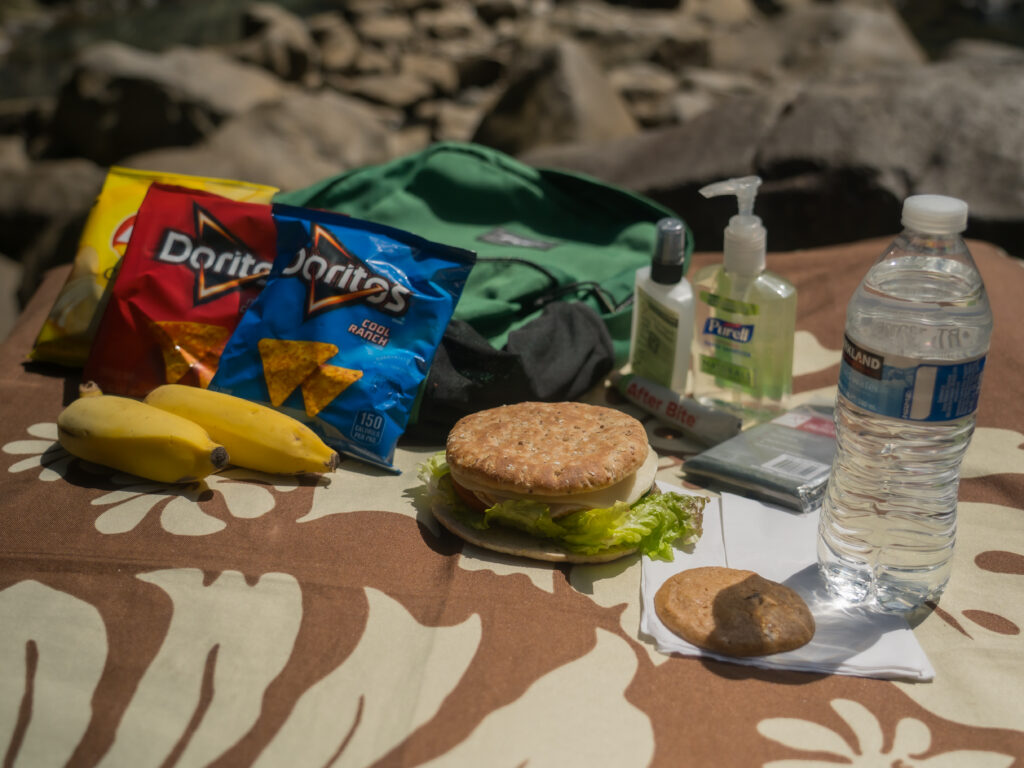
- Lightweight rain jacket (always!)
- Sturdy hiking (water) shoes with good traction
- Hydration system or 2+ liters of water
- Sun protection: reef-safe sunscreen, hat, sunglasses
- Layers: especially for elevation hikes
- Bug spray (especially after rain)
Pro Tips from a Naturalist Guide
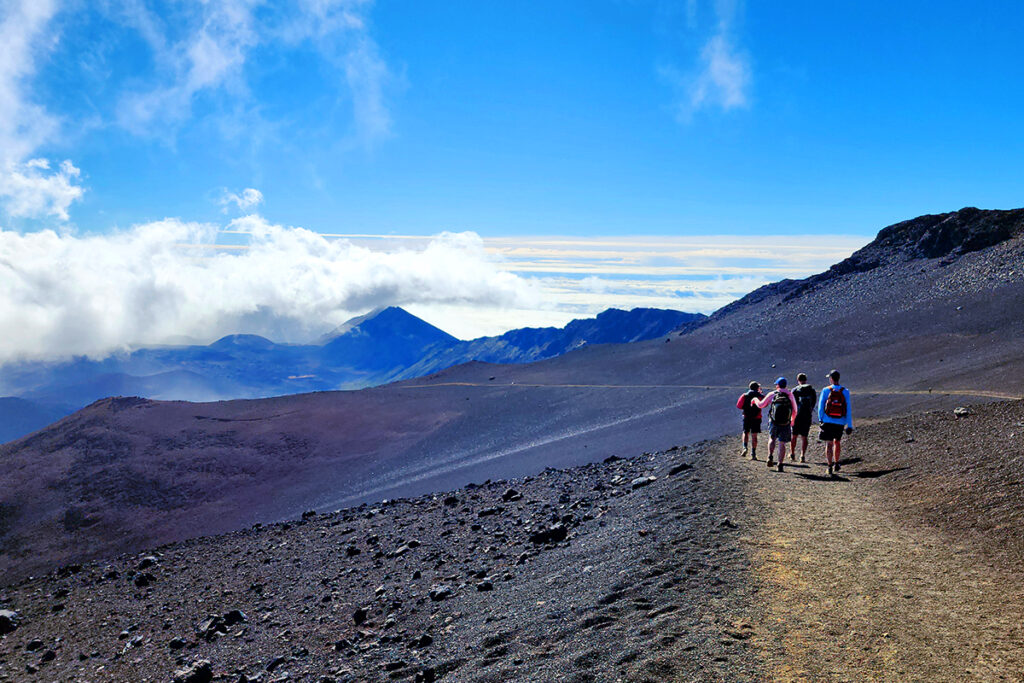
- Mornings are best. Clouds tend to roll in by afternoon—especially in the mountains. So don’t sleep on Maui mornings. Seriously. They’re pure magic. Take advantage of that jet lag, rise with the sun, and experience the island at its most serene—cooler temps, golden light, and trails (and beaches!) all to yourself.
- Ask a local. Guides know current trail conditions better than any weather app 💯
- Avoid shortcuts. That “local” path on Google Maps might be private or dangerous.
Month-by-Month Hiking Breakdown
| Month | Weather | Hiking Notes |
|---|---|---|
| January–March | Wet | Great for strong waterfalls, but slippery, check weather! |
| April–May | Mild | Ideal balance of sun and green |
| June–August | Dry/Hot | Best for summit and ridgeline hikes |
| September–October | Still Warm/Dry | Post-summer quiet, excellent weather |
| November–December | Rain returns | Beautiful greenery, be cautious |
Ready to Hike Smarter?
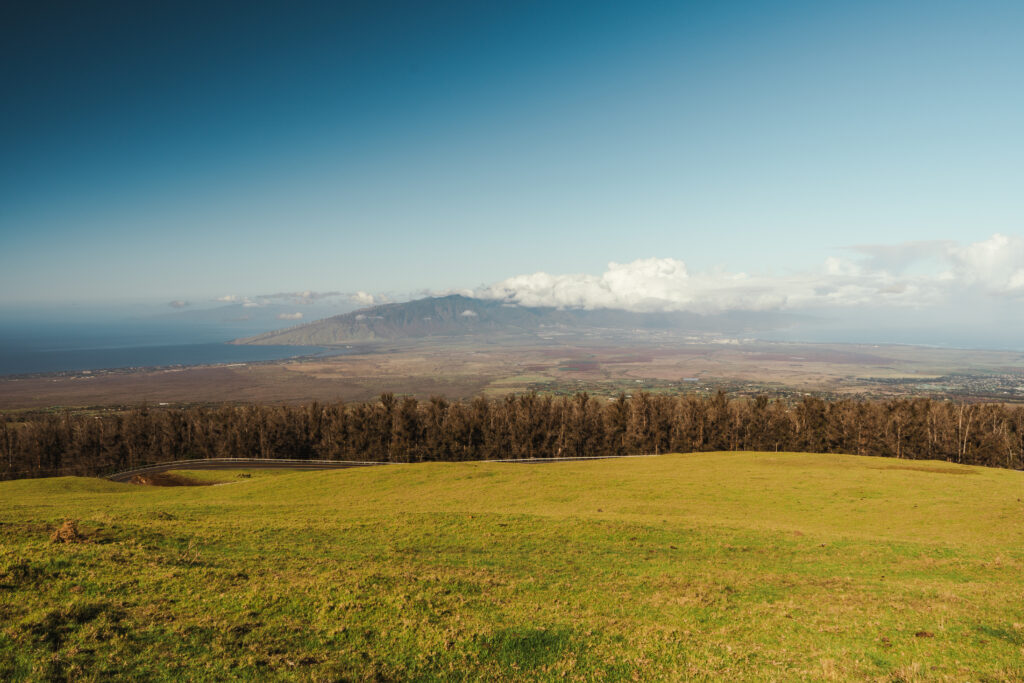
Understanding Maui’s weather patterns isn’t just about staying dry—it’s about unlocking the best possible experience on every trail. Whether you’re marveling at misty rainforest waterfalls or basking on a sunny ridgeline, your hike will be that much better when nature is on your side.
Want expert insight on trail conditions and safety? Join a Hike Maui tour and explore the island’s wild side with certified naturalist guides who live and breathe these trails.