

Maui’s most famous hikes often involve uneven lava rock, exposed roots, steep grades, stream crossings, or all four before lunch. For wheelchair users and travelers with limited mobility, that can make finding a suitable outdoor experience more complicated than simply searching for “easy hikes on Maui.”
The encouraging news is that several Maui parks, gardens, coastal areas, and scenic overlooks provide accessible pathways into the island’s natural beauty. These routes may not resemble traditional backcountry trails, but they offer something equally valuable: fresh air, mountain scenery, tropical vegetation, ocean views, and time outside with family and friends.
This guide highlights some of the best wheelchair-accessible paths and nature experiences on Maui, along with practical questions to ask before setting out.
Accessibility note: Conditions, maintenance schedules, parking availability, grades, and pathway surfaces can change. “ADA accessible” also does not mean every part of a park will work equally well for every wheelchair or mobility device. Contact the managing agency directly before visiting whenever specific access features are essential.
Are There Truly Wheelchair-Accessible Hiking Trails on Maui?
Fully accessible wilderness trails are limited on Maui.
Many of the island’s natural hiking routes cross steep volcanic terrain, rainforest mud, exposed rock, roots, or narrow ridgelines. Even Haleakalā National Park states that its park trails are unpaved and unsuitable for wheelchair use. Accessible visitor facilities and scenic viewpoints are available, but they should not be confused with accessible backcountry trails.
For that reason, the most dependable options are generally:
- Paved or maintained walking paths in public parks
- Landscaped garden pathways
- Coastal recreation paths
- Accessible overlooks reached by vehicle
- Short routes connecting parking areas with picnic and viewing spaces
Think of these places as accessible nature walks rather than conventional hikes. The scenery is still unmistakably Maui.
1. Kepaniwai Heritage Gardens
Location: Wailuku
Best for: Tropical scenery, cultural interpretation and a relaxed family outing
Facilities listed by Maui County: ADA parking, pathway, restrooms and pavilions
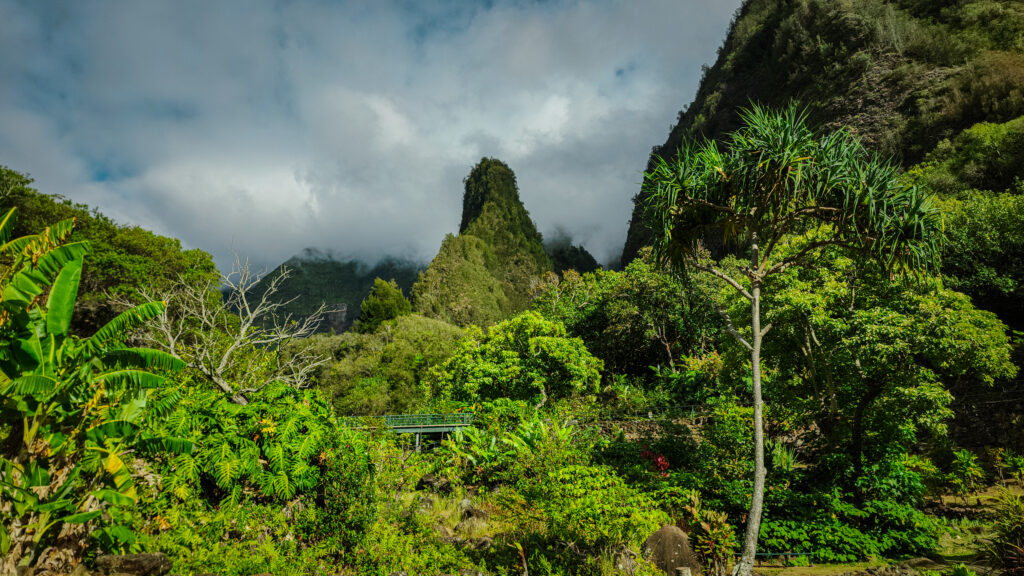
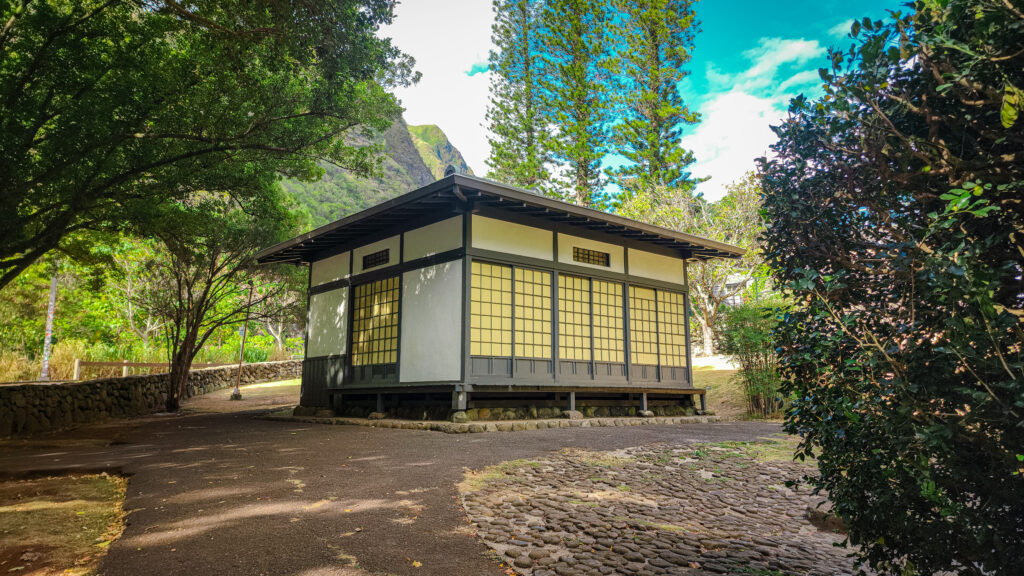
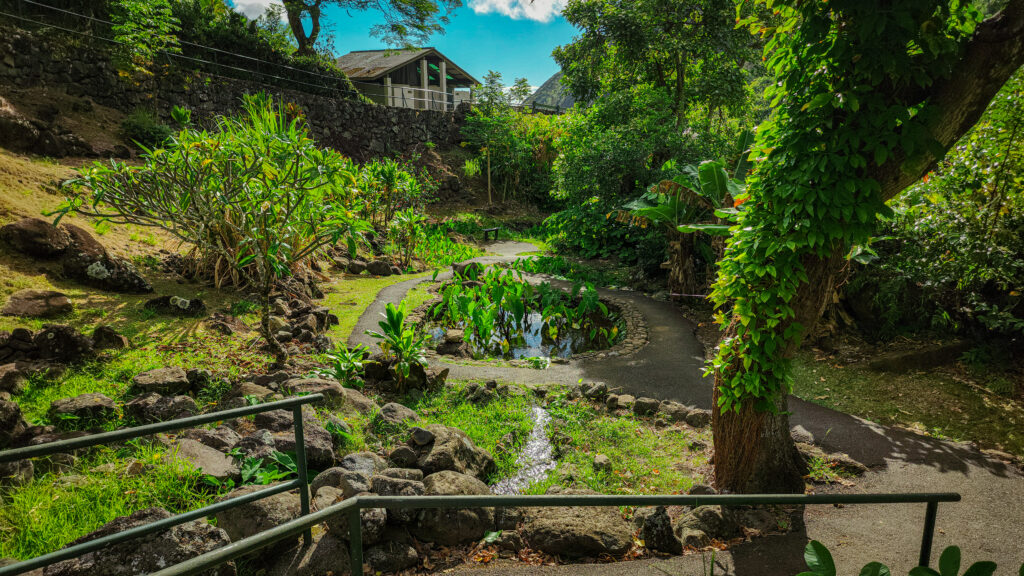
Set near the entrance to lush ʻĪao Valley, Kepaniwai Heritage Gardens offers one of Maui’s most appealing combinations of accessible outdoor recreation and cultural learning.
Landscaped walking paths wind through gardens and architectural displays representing communities that have helped shape modern Maui, including Hawaiian, Filipino, Chinese, Japanese, Portuguese, Korean and Puerto Rican cultures. The surrounding valley walls add a dramatic natural backdrop, while the Wailuku River brings the sound and atmosphere of a rainforest watershed.
Maui County identifies ADA parking, a pathway, restrooms and picnic pavilions among the park’s amenities. The grounds cover 7.6 acres, although an accessible designation does not necessarily mean that every side path or exhibit is equally navigable.
Why visit?
Kepaniwai works well for visitors who want a gentler alternative to a traditional ʻĪao Valley hike. It is also a good place to slow down and consider how Maui’s landscapes and communities are connected.
Rather than racing from viewpoint to viewpoint, leave time to observe details: shifting clouds on the West Maui Mountains, tropical foliage collecting beads of rain, and the changing sound of water after a passing shower.
2. Keʻanae Arboretum
Location: Hāna Highway, East Maui
Best for: Tropical plants, rainforest scenery, and a short botanical walk
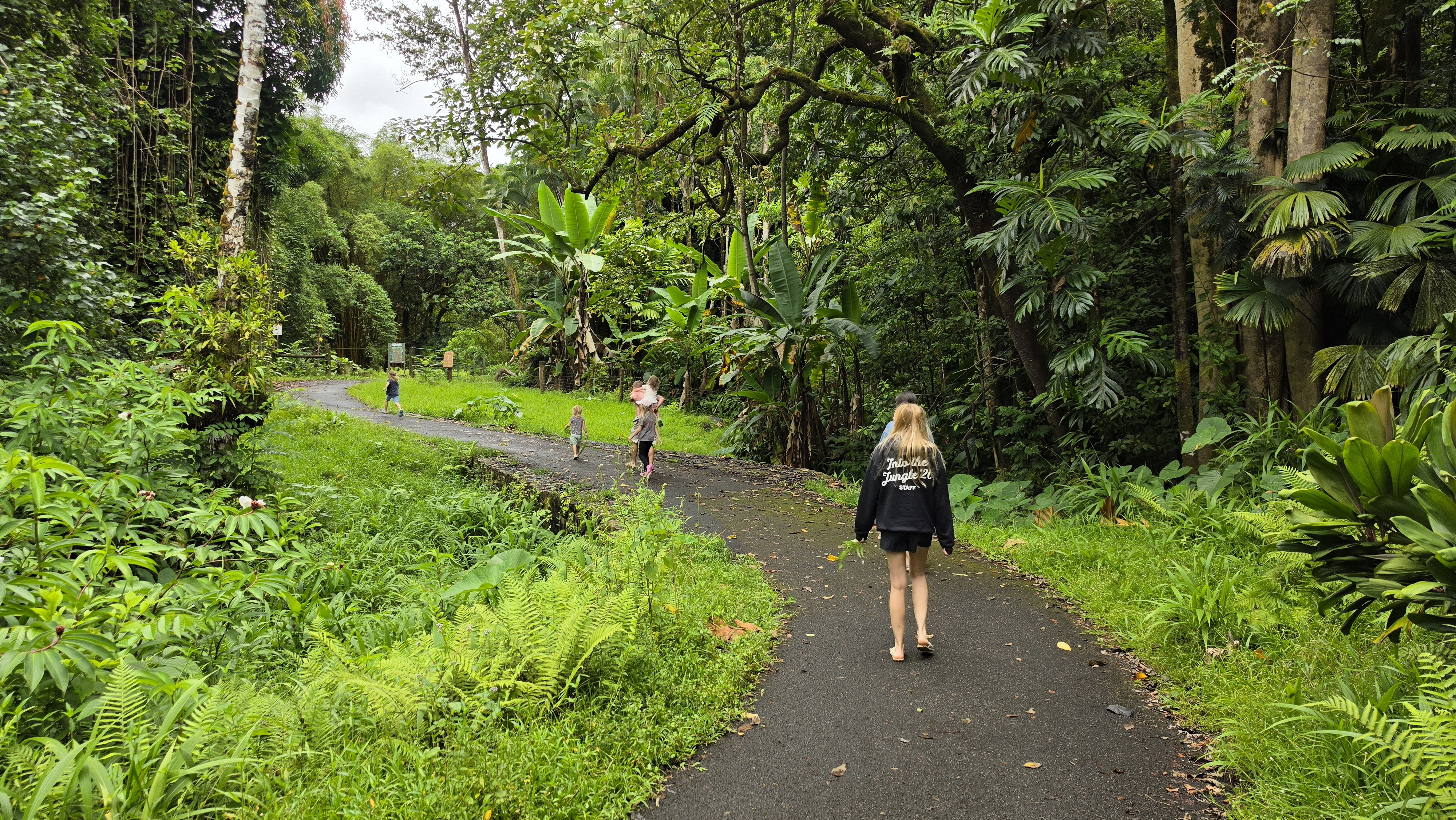
Distance and accessibility: 0.6-mile, relatively flat asphalt trail with parking and an accessible trail.
Keʻanae Arboretum offers a short walk through the humid forest landscape of East Maui. The arboretum is known for its collection of tropical plants, including palms, heliconias, ginger, taro, and colorful rainbow eucalyptus trees.
The pathway provides an opportunity to slow down and examine the vegetation that thrives along Maui’s windward coast. Frequent rainfall, warm temperatures, and rich volcanic soils support dense plant growth, creating a distinctly different environment from the island’s dry western shoreline.
Keʻanae Arboretum is open to visitors and can be included as a short botanical stop along the Road to Hāna. Use caution around the roadside parking area and when entering or leaving the site, as traffic on Hāna Highway can be fast and visibility may be limited.
Rain is common in East Maui, so the pathway may be wet or slippery even when conditions elsewhere on the island are dry. Wear shoes with good traction, remain on the established trail, and allow extra time to enjoy the arboretum’s tropical plants and rainforest setting.
A walk through the arboretum offers a botanical journey through the tropics, showcasing plants from Hawaiʻi and tropical regions around the world. Along the way, visitors can compare broad leaves, colorful flowers, moisture-loving ferns, distinctive bark, and the many adaptations that help tropical plants thrive in warm, rainy environments.
Naturalist tip
Pause beneath the tree canopy and look closely at how the arboretum’s tropical plants compete for light. Binoculars can help you study flowers, fruit, leaves, and birds higher in the canopy without stepping off the path.
Rain is common in East Maui, so expect wet leaves, slick surfaces, and muddy patches. Wear shoes with good traction, stay on the established route, and avoid touching unfamiliar plants, since some tropical species can irritate the skin.
3. Puaʻa Kaʻa State Wayside
Location: Hāna Highway, East Maui
Best for: A short rainforest stop with waterfalls, picnic areas, and restrooms
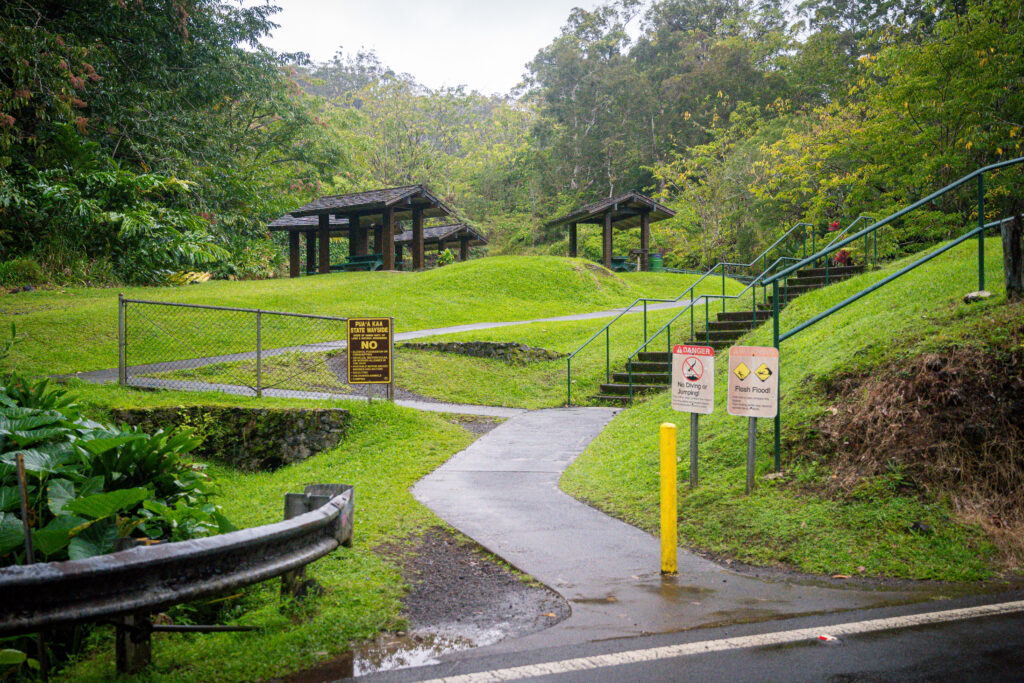
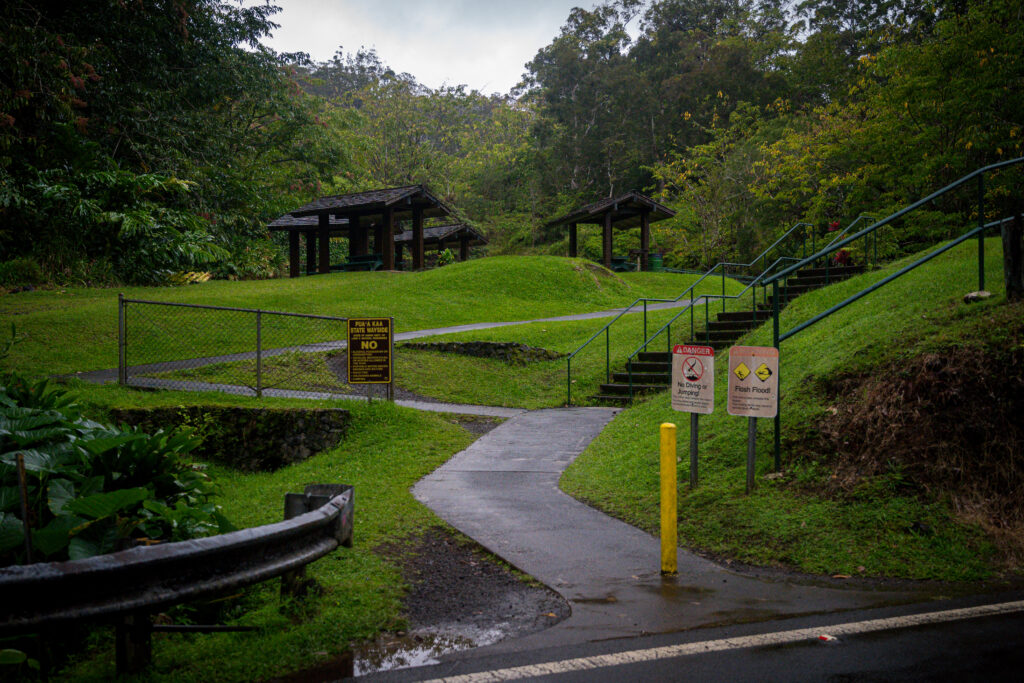
Facilities: Parking, picnic pavilions, restrooms, railings, and developed park areas
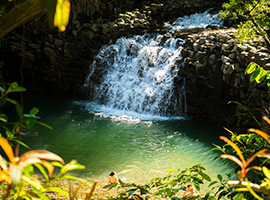
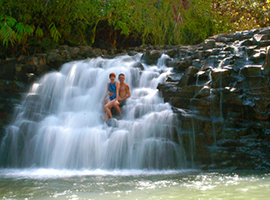
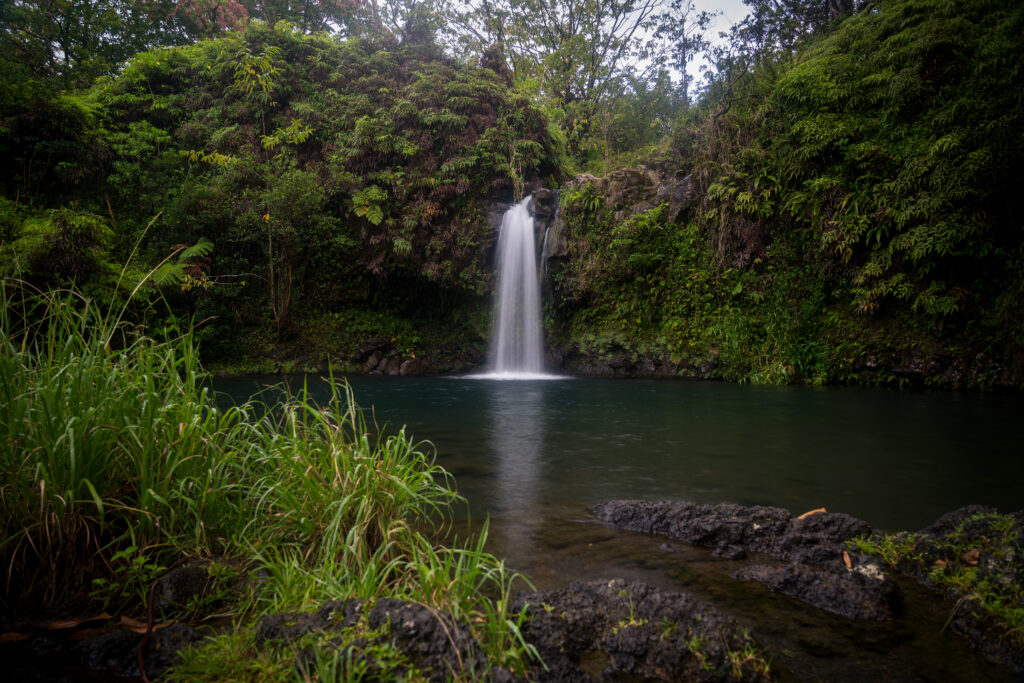
Puaʻa Kaʻa State Wayside is a small rainforest park along the Hāna Highway, offering a convenient place to pause among dense tropical vegetation, scenic waterfalls, and freshwater pools. Hawaiʻi State Parks describes the five-acre site as a rest and picnic area in the rainforest.
This is more of a scenic roadside nature stop than a traditional hike. Developed areas near the parking lot allow visitors to experience East Maui’s lush environment without committing to a long trail. Picnic pavilions and restrooms make it a practical break during the winding drive toward Hāna.
The surrounding forest offers opportunities to notice moisture-loving ferns, broad-leaved tropical plants, vines, and the many shades of green supported by East Maui’s frequent rainfall. The sound of moving water and the cooler forest air create a marked contrast with the island’s sunny leeward coast.
Why visit?
Puaʻa Kaʻa State Wayside may be especially suitable for:
- Travelers seeking a brief nature stop along the Road to Hāna
- Families who need access to restrooms and picnic facilities
- Visitors who want rainforest and waterfall scenery without a lengthy hike
- Anyone looking for a shaded place to stretch during the drive
Accessibility can vary within the park. Routes toward the waterfalls and pools may include wet, uneven, sloped, or slippery surfaces and should not be assumed to be wheelchair accessible. Visitors with specific mobility needs should evaluate conditions near the parking and picnic areas before proceeding.
Rainfall can quickly make surfaces slick, and freshwater pools may be unsafe during periods of heavy rain or high water. Stay behind barriers, follow posted warnings, and never enter closed areas. The park underwent facility improvements in 2025 that included work on its restrooms, pavilions, and railings.

4. Wailea Beach Path
Location: Wailea, South Maui
Best for: A scenic coastal roll or walk near South Maui resorts
Path type: Approximately 1.5 miles of developed oceanfront pathway
The Wailea Beach Path offers a sunny, developed alternative to Maui’s uneven natural trails. The approximately 1.5-mile coastal route passes beaches, landscaped resort grounds, restaurants, and sweeping views of the Pacific.
The path is convenient for visitors staying in Wailea or nearby Kīhei and allows users to choose their own distance and turnaround point. Much of the route is paved, although slopes, transitions and connections to beach-access areas may vary. Visitors with specific mobility requirements should confirm which access point and section best suit their equipment.
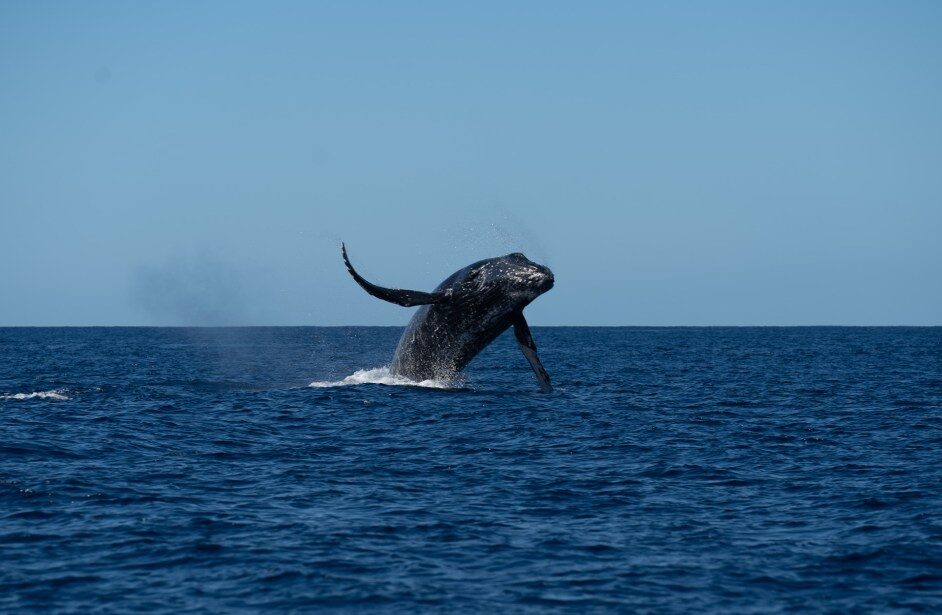
The path does not offer the rainforest immersion of East Maui or the volcanic drama of Haleakalā. Instead, it highlights South Maui’s warmer, drier coastal environment, with open skies, ocean views, landscaped vegetation, and opportunities to watch seabirds or scan the water for seasonal humpback whales!
Visit earlier in the morning or later in the afternoon when possible. Midday pavement can become hot, shade is limited in places, and Maui’s sun may feel deceptively gentle when trade winds are blowing.
5. Haleakalā National Park’s Accessible Scenic Areas
Location: Haleakalā summit
Best for: High-elevation volcanic scenery without a backcountry hike
Important limitation: The park’s hiking trails are not suitable for wheelchairs
Haleakalā belongs on this list with a major qualification: its wilderness trails are not wheelchair accessible. The National Park Service states that park trails are currently unpaved and unsuitable for wheelchair use.
However, visitors can still experience the summit landscape through accessible facilities and vehicle-supported viewpoints. The park lists accessible restrooms at several locations, including the Haleakalā Visitor Center, Kalahaku Overlook, Park Headquarters Visitor Center and Hosmer Grove. The summit visitor facility is accessible with assistance by way of a long ramp.

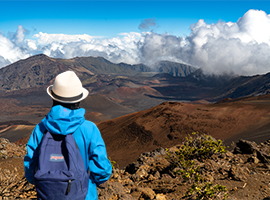
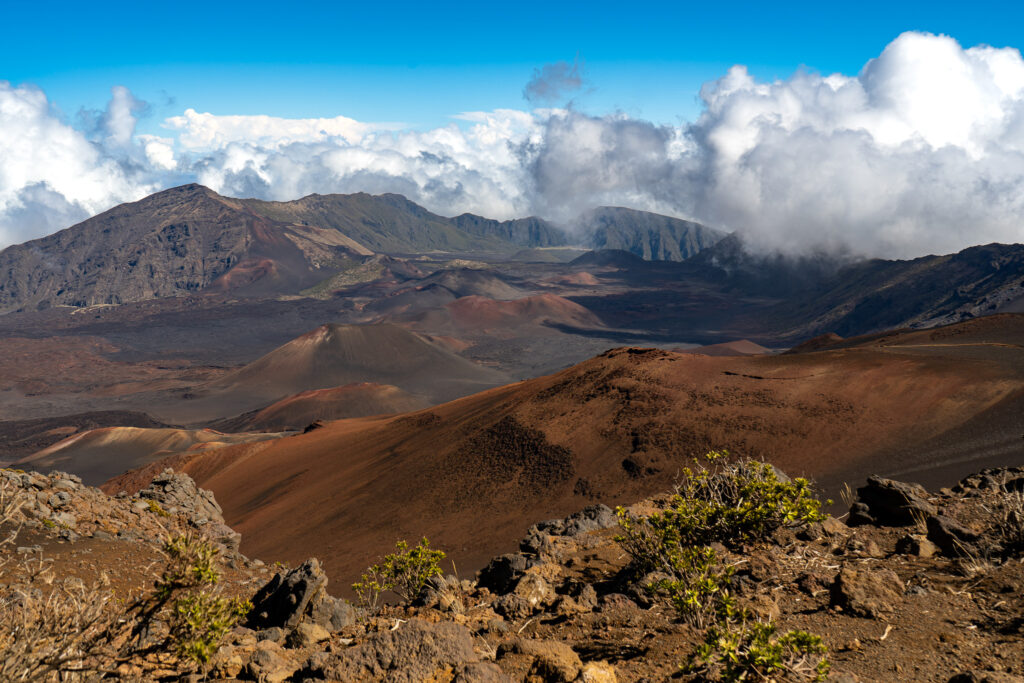
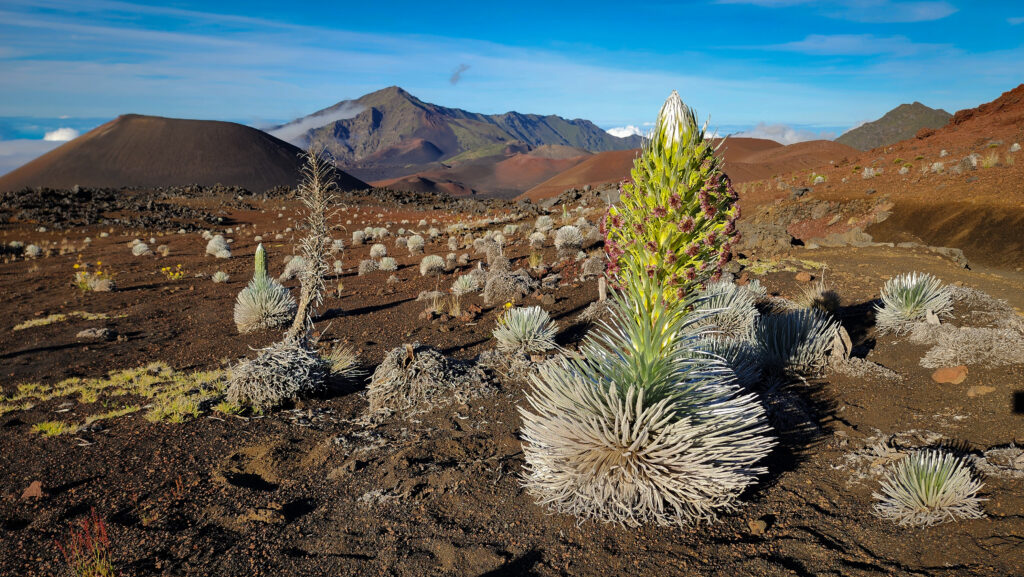
At more than 10,000 feet above sea level, the summit presents a landscape unlike Maui’s tropical coastline. Volcanic cinder, rapidly moving clouds and endemic Silverswords create the feeling of entering another world.
The ʻāhinahina, or Haleakalā silversword (Argyroxiphium sandwicense subsp. macrocephalum), is found only on Haleakalā. Admire these rare plants from established viewing areas and never touch or approach them across fragile ground.
Plan carefully at elevation
The summit is cold, windy and high enough to affect breathing, stamina and some medical conditions. Temperatures can be dramatically cooler than at the beach. Bring warm layers, water and sun protection, and speak with a healthcare professional before visiting high elevation when relevant to your health.
Sunrise entry rules and park conditions can also change, so check official National Park Service information and our blog on the subject HERE.
A Note About ʻĪao Valley State Monument
ʻĪao Valley frequently appears in searches for easy Maui hikes, but visitors should not assume that the entire experience is wheelchair accessible.
Some developed areas near the entrance may be easier to navigate, while portions of the lookout route include stairs and other barriers. In addition, closures and reservation requirements can change. Hawaiʻi State Parks currently requires advance reservations for out-of-state visitors when the monument is open, and temporary closures may occur for weather recovery, safety work or maintenance.
Kepaniwai Heritage Gardens, located farther down ʻĪao Valley Road, may offer a more dependable accessible pathway experience, but current conditions should still be confirmed before traveling.
What to Ask Before Visiting an Accessible Maui Path
Accessibility varies by person, mobility device and weather conditions. Before choosing a route, ask specific questions rather than relying only on the word “accessible.”
Useful questions include:
- Is the entire path paved, or only the route to the restroom?
- How wide is the narrowest section?
- Are there steep grades or cross-slopes?
- Are curb cuts available between the parking lot and path?
- Does the surface contain cracks, gravel, sand or exposed roots?
- Are benches or shaded rest areas available?
- Are accessible restrooms open during the planned visit?
- Can a wheelchair-accessible vehicle unload safely?
- Is assistance likely to be needed on ramps?
- Have storms or construction affected the path recently?
Power wheelchairs, manual wheelchairs, scooters and all-terrain mobility devices perform differently. A route that feels comfortable for one visitor may be tiring or impractical for another.
Maui Weather Can Change Accessibility Quickly
On Maui, trail conditions are closely tied to elevation and geography.
A sunny morning in Kīhei does not guarantee dry conditions in ʻĪao Valley, and a warm beach afternoon says very little about the temperature at Haleakalā’s summit. Heavy rain can create puddles, wash debris across paths and make transitions between pavement and grass difficult.
Before leaving:
- Review the forecast for the specific part of the island
- Check official closure and facility notices
- Carry water even on short outings
- Use sun protection
- Bring layers for Upcountry and Haleakalā
- Avoid entering closed or damaged areas
Flash flooding is a serious concern around streams and narrow valleys. Never cross barriers or continue into an area that authorities have closed.
Accessible Does Not Mean Risk-Free
A maintained pathway can reduce certain mobility barriers, but Maui’s natural conditions still deserve respect.
Heat, dehydration, intense ultraviolet exposure, falling branches, slippery pavement, waves and rapidly changing weather can affect visitors on even the shortest outing. Oceanfront paths may also collect windblown sand, while tropical vegetation can narrow a route between maintenance visits.
Travel with a companion when assistance may be needed, carry essential medication, and make sure mobility equipment is charged or in good repair before setting out.
Practicing Respectful Outdoor Recreation
Accessible travel and responsible travel belong together.
Stay on established routes to protect native plants and reduce erosion. Pack out everything you bring. Keep a respectful distance from wildlife, cultural structures and restoration areas. Avoid picking flowers, moving rocks or treating historic sites as photo props.
In Hawaiʻi, outdoor spaces are not simply scenic backdrops. They are places with ecological, cultural and community meaning. Moving through them thoughtfully helps preserve the experience for residents and future visitors.
Finding the Right Maui Outdoor Experience
Maui still has considerable room to improve the number and variety of wheelchair-accessible nature trails. Nevertheless, visitors with mobility disabilities can find meaningful ways to experience the island outside—from the green walls of ʻĪao Valley to the sunny South Maui shoreline and the extraordinary summit of Haleakalā.
The key is to distinguish between a truly accessible route and a park that offers only a few accessible amenities. Research the exact path, confirm current conditions and choose an outing that fits your equipment, comfort level and preferred pace.
A rewarding outdoor experience does not have to involve scrambling over roots or collecting mud in your shoes. Sometimes it begins with a smooth path, a cool trade wind and enough time to notice what is growing, flying or changing in the landscape around you.
Hike Maui’s naturalist guides help guests understand the island’s plants, geology, watersheds and cultural landscapes. Travelers with mobility needs should discuss their specific requirements directly with the team so available options and current site conditions can be evaluated honestly before booking.