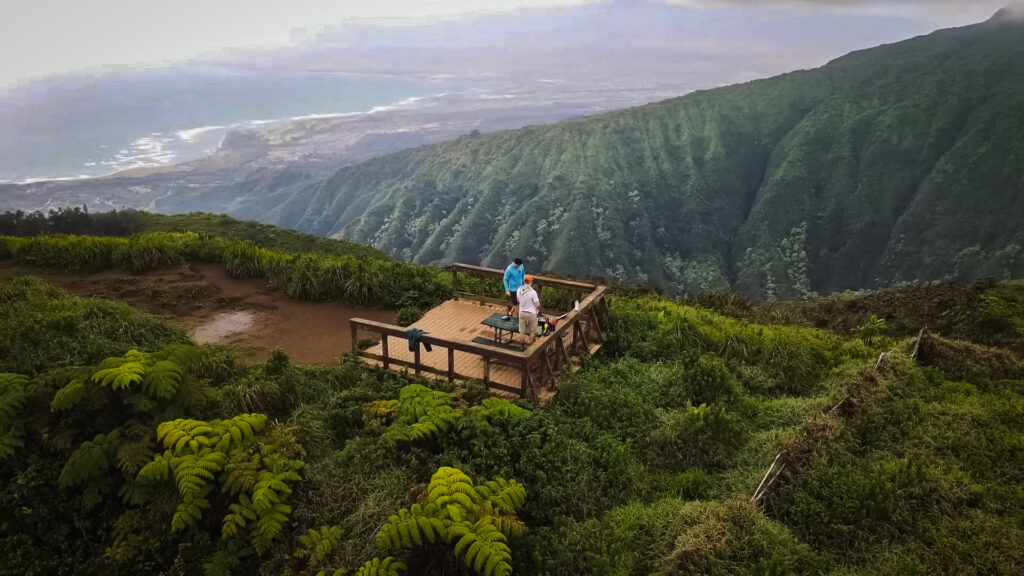

Maui is a paradise for hikers, but it is also a place where conditions can change quickly. One moment you are strolling through a shaded rainforest, and the next you are slipping through mud, dodging mosquitoes, or wondering why the sunny trailhead has turned into a misty mountain drama. Packing well makes all the difference.
Whether you are planning a family-friendly waterfall hike, a short rainforest walk, or a more adventurous trek across volcanic terrain, here is what to bring for a safe, comfortable Maui hiking experience.
Maui Hiking Packing Quick-Reference Guide
For most Maui trails — wet, humid, and elevation-variable — these 8 items are essential.
- Footwear: closed-toe water hiking shoes with ankle support and grip (not flip-flops or trail runners)
- Sun protection: mineral-only sunscreen (zinc oxide or titanium dioxide — reef-safe required by law)
- Water: minimum 2 liters per person; 3 liters for children or hikes over 2 hours
- Snacks: high-energy, packable (trail mix, bars, fruit) — no trail resupply options
- Clothing: moisture-wicking layers + a packable rain jacket (rain hits without warning at elevation)
- First aid: blister care, pain reliever, allergy meds, any personal prescriptions
- Insect repellent: EPA-registered DEET or picaridin for rainforest trails
- Trash bag: carry-in, carry-out — Leave No Trace is enforced on state land
1. Footwear: Choose Grip Over Glamour
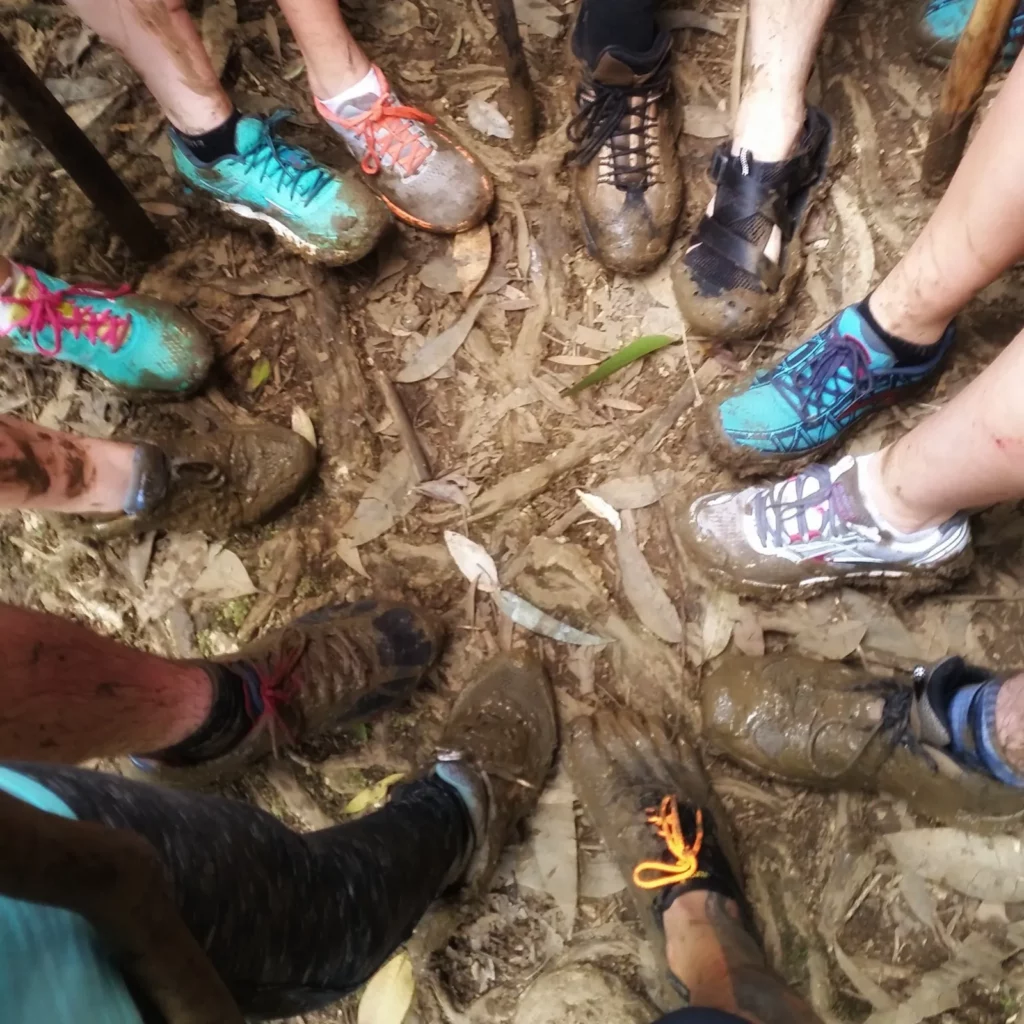
If there’s one piece of gear that can make or break a Maui hike, it’s your footwear. Many of the island’s most popular trails include muddy paths, stream crossings, slick rocks, exposed roots, and uneven terrain—sometimes all on the same hike. That’s why hiking water shoes are often the best choice for Maui adventures.
Unlike traditional hiking boots, quality hiking water shoes are designed to handle wet conditions without becoming heavy and uncomfortable. They provide the traction needed for slippery surfaces while allowing water to drain quickly after stream crossings or waterfall swims. For families, they also eliminate the need to pack a second pair of shoes for water activities.
Look for hiking water shoes with closed toes, aggressive tread, and secure straps or laces. Younger children should wear water shoes that fit snugly and won’t slip off in mud or moving water.
Skip the flip-flops on the hike. They may be perfect for the beach or a sunset stroll, but they offer little protection or traction on Maui’s muddy trails, slippery rocks, and exposed roots.
Pro tip: Toss a pair of slippers in the car and change into them after your hike. Sliding into dry, comfortable footwear after a muddy adventure is a simple luxury—and a total game changer.
Recommendation: Closed-toe hiking water shoes with excellent grip and drainage for every member of the family.
Pack: Sturdy trail shoes, hiking boots, or grippy closed-toe sneakers. For help choosing, check out our shoe buying guide HERE.
2. Sun Protection: Maui Sun Is No Joke
Even on cloudy days, Maui’s UV exposure can be strong. Bring a wide-brimmed hat, UV-protective sunglasses, and lightweight UPF clothing like sun hoodies, etc.
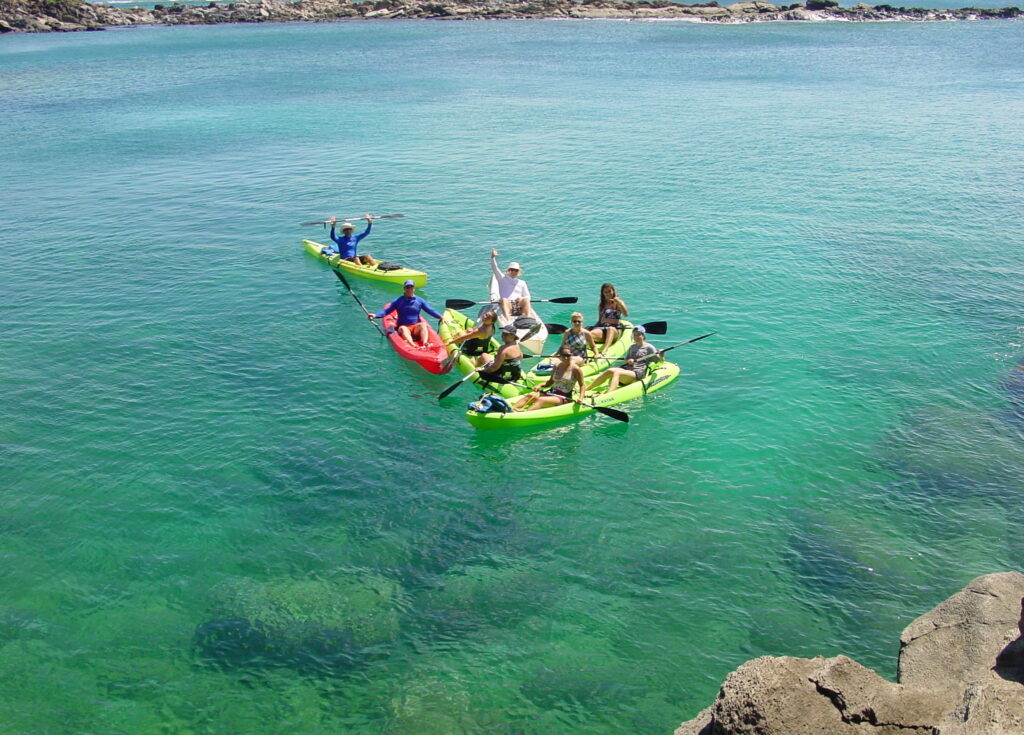
For sunscreen, Maui has strict rules. Maui County requires mineral-only sunscreen, meaning active ingredients should be zinc oxide and/or titanium dioxide. Avoid chemical sunscreens and be cautious with vague “reef-friendly” labels.
Pack: Mineral sunscreen, sun hat, sunglasses, UPF shirt, and lightweight long sleeves.
3. Hydration: Bring More Water Than You Think
Warm weather, humidity, elevation, and kids who “aren’t thirsty” until they suddenly are all make hydration essential. Each person should carry their own water bottle when possible. For longer hikes, a hydration pack is useful.
Haleakalā National Park also recommends bringing water, food, sun protection, sturdy shoes, and cold/wet-weather layers. (National Park Service)
Pack: Reusable water bottles or hydration packs, plus extra water in the car.
4. Snacks: Trail Fuel for Kids and Adults
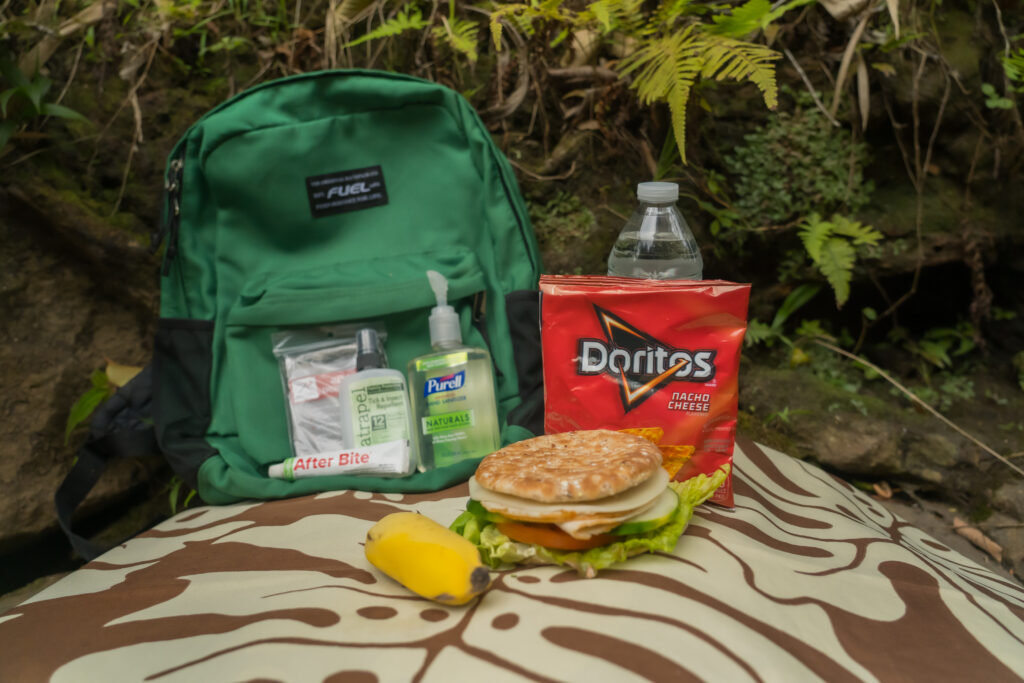
Hungry hikers are rarely cheerful hikers. Pack snacks that hold up well in heat, such as trail mix, granola bars, dried fruit, crackers, and sandwiches for longer outings.
Skip anything that melts easily unless you enjoy discovering chocolate archaeology in your backpack.
Pack: Trail mix, granola bars, fruit, crackers, and a light lunch for longer hikes.
5. Clothing Layers: Prepare for Rain, Wind, and Elevation
Maui’s weather changes quickly, especially in rainforest areas and at higher elevations. A sunny morning can turn wet and breezy fast. Bring moisture-wicking clothing, a light rain jacket, and an extra layer for children.
If visiting Haleakalā, remember that summit temperatures can be much colder than sea level, and conditions may feel surprisingly wintery for Hawaiʻi. (Recreation.gov)
Pack: Moisture-wicking base layers, lightweight rain jacket, warm layer, and extra socks.
6. First Aid Kit: Small Item, Big Difference
A basic first aid kit is essential, especially for family hikes. Include bandages, antiseptic wipes, blister care, tweezers, insect-bite relief, and any personal medications.
Pack: Compact first aid kit, blister pads, tweezers, and needed medications.
7. Navigation and Safety Tools: Know Before You Go
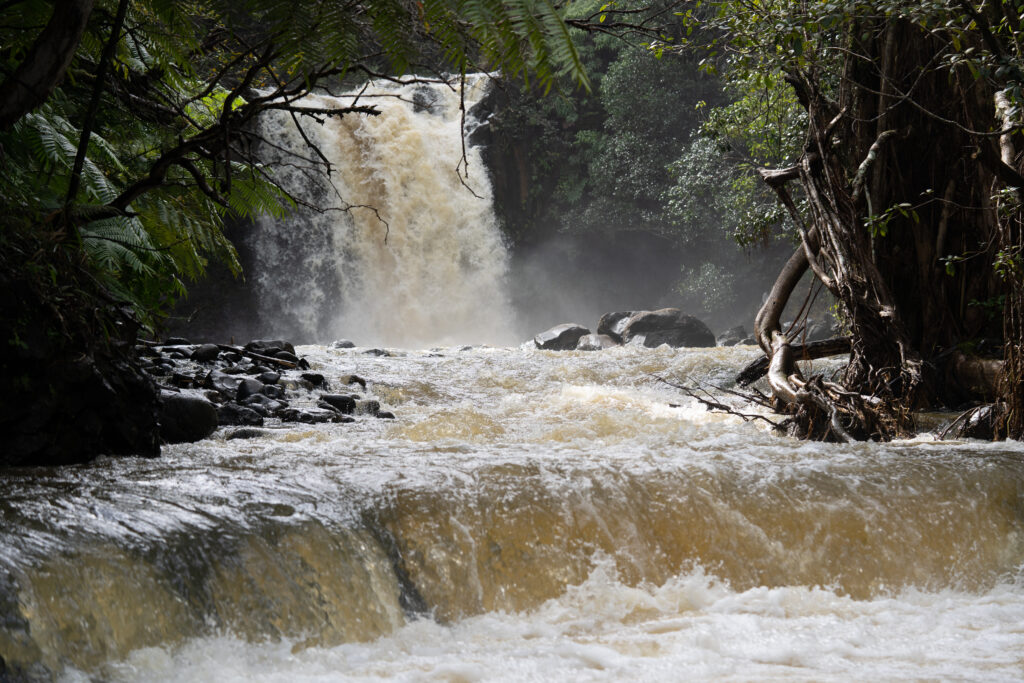
Many Maui trails are easy to follow, but phones can lose service in valleys and forested areas. Bring a downloaded map, a charged phone, and a backup power bank. For self-guided hikes, check weather and closures before leaving.
Maui County advises hikers to stay on trails, avoid crossing streams during threatening weather, heed warning signs, and prepare for sudden changes. (Maui County)
Pack: Downloaded maps, phone, power bank, and a physical map when available.
8. Baby and Toddler Gear: Comfort for the Smallest Explorers
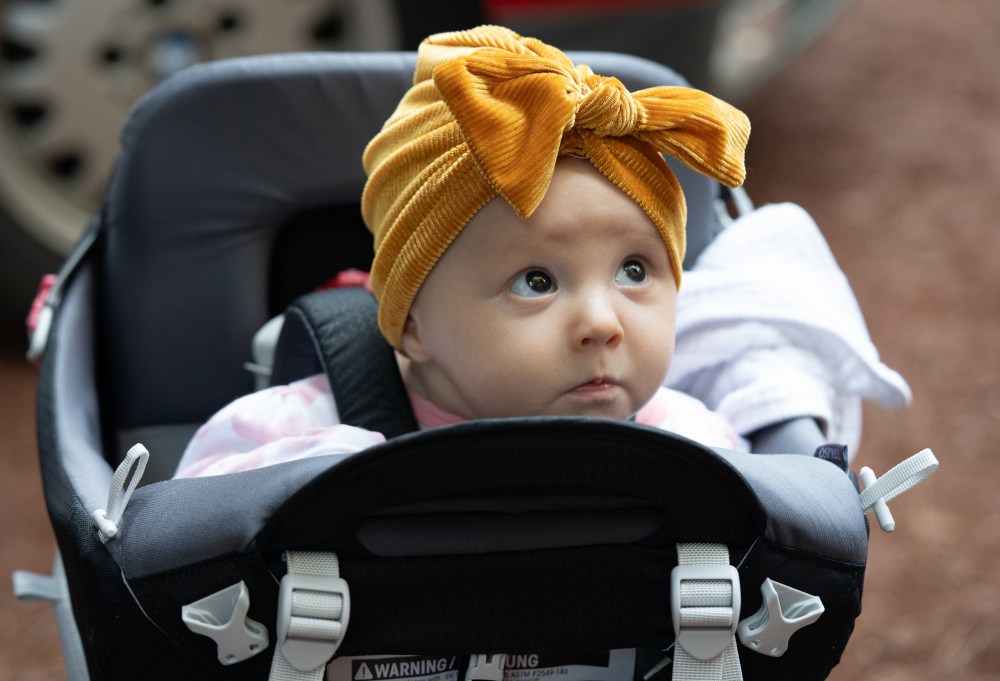
For babies and toddlers, a hiking child carrier is usually better than a stroller unless you are on a paved or very easy path. Look for a carrier with sun protection, ventilation, and storage for diapers, wipes, snacks, and extra clothes.
Pack: Child carrier with sunshade, diapers, wipes, extra clothing, and kid-friendly snacks.
Pro tip: Hiking with a child carrier changes your balance and center of gravity. Trekking poles add an extra point of contact with the trail, helping you stay stable on slippery, rocky, or uneven terrain.
9. Insect Protection: Mosquitoes Love Rainforest Hikes Too
Maui’s lush areas can have mosquitoes, especially near streams and shaded vegetation. Use EPA-registered insect repellent. The CDC lists DEET, picaridin, IR3535, oil of lemon eucalyptus, PMD, and 2-undecanone among effective repellent ingredients. (CDC)
For young children, check age guidance carefully. Oil of lemon eucalyptus and PMD should not be used on children under 3. (HealthyChildren.org)
Pack: EPA-registered insect repellent and lightweight long sleeves.
10. Trash Bag: Leave Maui Better Than You Found It
Bring a small trash bag for wrappers, tissues, snack packaging, and anything else you carry in. Teach kids the simple rule: what comes on the trail leaves the trail.
Pack: Small reusable trash bag or zip-top bag.
2026 Maui Hiking Packing Checklist
- Closed-toe hiking water shoes or trail shoes
- Mineral sunscreen
- Hat and sunglasses
- Water bottle or hydration pack
- Snacks or light lunch
- Rain jacket
- First aid kit
- Insect repellent
- Downloaded map
- Charged phone and power bank
- Small trash bag
- Child carrier, if hiking with little ones
Pack Smart, Hike Happy
The best Maui hikes are not just about reaching a waterfall, viewpoint, or crater trail. They are about feeling prepared enough to enjoy the small moments along the way: the smell of wet ginger, the sound of running water, the flash of a bird in the canopy, or your kid proudly announcing they are “a jungle explorer now.”
With the right gear, your Maui hiking adventure can be safer, more comfortable, and far more memorable.
For families who want local knowledge, route planning, natural history, and a guide who knows what to do when the trail gets muddy, Hike Maui’s guided tours are a smart way to experience the island’s wild places with confidence.