


There are plenty of good reasons to get up before dawn on Maui. Cooler temperatures, quieter trails, changing clouds, and that first wash of light across the island can transform a familiar landscape.
And while Haleakalā gets most of the attention when people search for a sunrise hike on Maui, you don’t necessarily have to stand at 10,000 feet to make sunrise the highlight of your morning.
Maui’s geography creates remarkably different sunrise experiences within a relatively small island. You can watch morning light reach the dry slopes above Māʻalaea, climb through misty vegetation in the West Maui Mountain, walk across young lava along the island’s southern coast, or begin the day above the clouds before descending into Haleakalā.
Here are some of the best sunrise hikes on Maui, including two very different trails inside Haleakalā National Park.
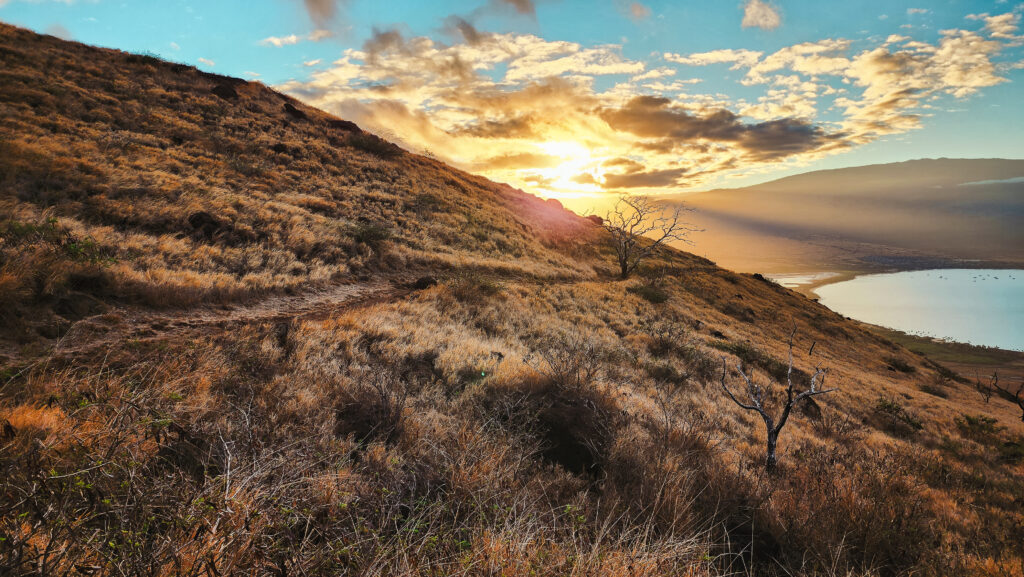
1. Lahaina Pali Trail
Best for: Big coastal views and a challenging early-morning climb
Difficulty: Strenuous
Trail length: 5.5 miles one way if hiking the entire trail
Landscape: Dry shrubland, ridgelines, ocean views
The Lahaina Pali Trail makes a convincing argument for hiking early.
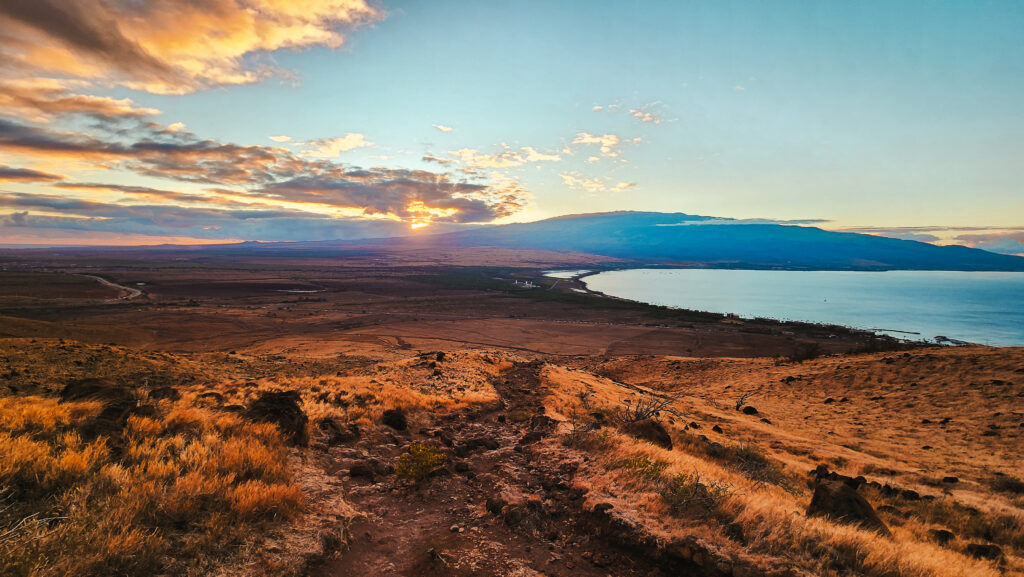
This historic route climbs the dry southern slopes of the West Maui Mountains above Māʻalaea Bay. The Hawaiʻi Department of Land and Natural Resources lists the full trail at 5.5 miles one way, reaching elevations of roughly 1,600 feet. From higher portions of the trail, hikers can look toward Kahoʻolawe and Lānaʻi and across the broad blue water surrounding Maui.
At sunrise, however, you don’t necessarily need to complete the entire point-to-point route.
Beginning early allows you to climb while temperatures are relatively comfortable and watch the landscape slowly take shape around you. As daylight spreads across Māʻalaea Bay, the otherwise muted browns, golds, and greens of this dry landscape begin to glow.
It’s also a fascinating contrast to the Maui many visitors picture. This isn’t rainforest hiking. The trail crosses rocky, sun-exposed terrain where dryland vegetation replaces dripping ferns and waterfalls.
That exposure is exactly why an early start makes sense. Once the sun gets higher, this can become a hot hike with very little shade.
During winter, keep an eye on the ocean as well. Humpback whales may sometimes be visible offshore from the trail’s elevated viewpoints.
Sunrise tip: We recommend starting this trail about 30 minutes before dawn when temps are much cooler, bring a headlamp rather than relying on your phone’s flashlight, and remember that you’ll be traveling over uneven, rocky ground before full daylight. Carry plenty of water and sun protection for the return.
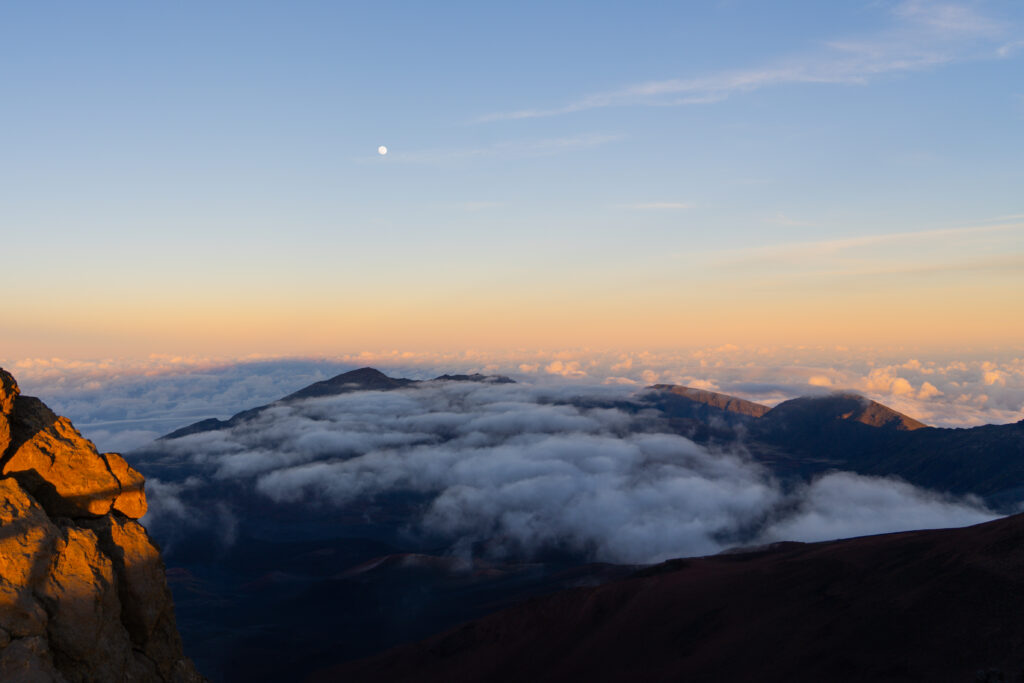
2 & 3. Haleakalā National Park: Sunrise Plus Two Incredible Hikes
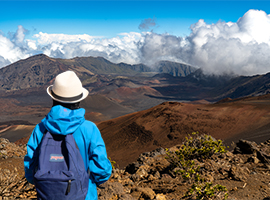
If your idea of a Maui sunrise hike involves watching daylight arrive from nearly 10,000 feet above sea level, Haleakalā is difficult to match.
But here’s the part hikers shouldn’t overlook: sunrise can be the beginning of the adventure rather than the end.
After watching the sky brighten from one of the park’s designated sunrise areas, you can explore either Halemauʻu Trail or Keoneheʻeheʻe Trail, better known as Sliding Sands. Together, they offer two distinctly different introductions to Haleakalā’s summit wilderness.
A practical note comes first. A reservation is required for vehicles entering Haleakalā National Park’s Summit District between 3:00 a.m. and 7:00 a.m. Reservations are made in advance through Recreation.gov and are separate from the park entrance fee. The park is open 24 hours, but vehicles without a sunrise reservation cannot enter the Summit District during those hours. Check out our blog on sunrise reservations here.
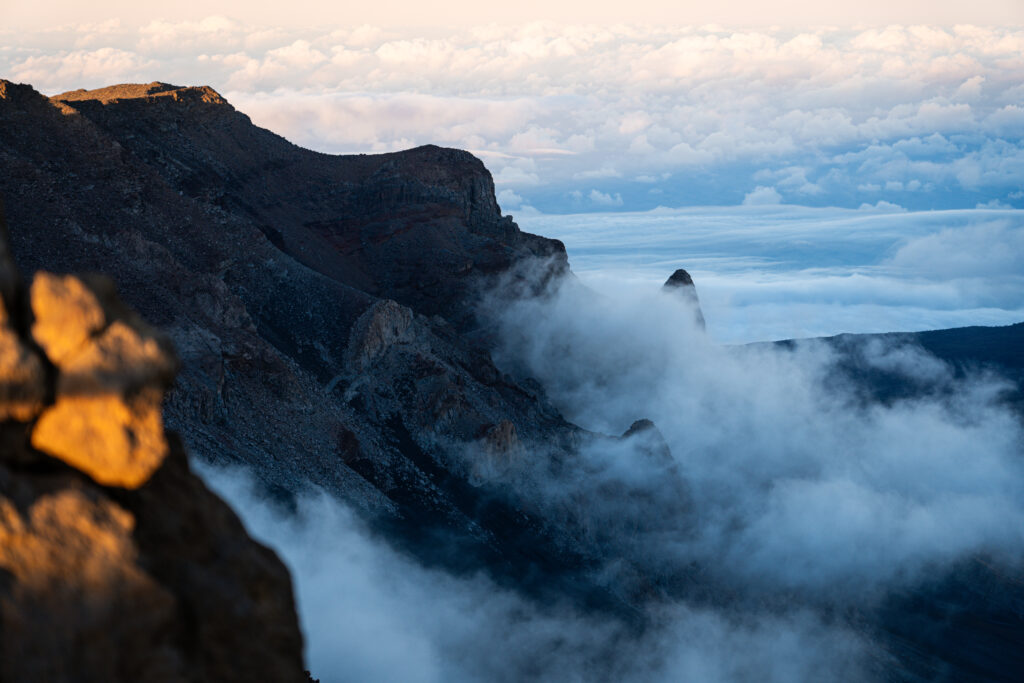
Option 1: Halemauʻu Trail
Best for: Native shrubland, crater views, birding, and a shorter post-sunrise hike
Difficulty: Moderate to strenuous depending on turnaround point
Short option: 2.2 miles round trip to the crater viewpoint
Landscape: Native shrubland, dramatic ridges and crater walls
Halemauʻu reveals Haleakalā gradually.
The trail begins at 8,000 feet in elevation and travels through native subalpine shrubland toward the rim of the enormous erosional depression commonly called Haleakalā Crater.
The first major viewpoint is about 1.1 miles from the trailhead. Here, the terrain drops away dramatically, opening views into both the crater and Koʻolau Gap. Turning around here makes for a manageable 2.2-mile round-trip hike.
Continue farther and the character changes completely. The trail reaches the area known as Rainbow Bridge and then plunges down a remarkable series of switchbacks carved into the crater wall.
Along the upper portion of Halemauʻu, look for native plants such as ʻōhelo (Vaccinium reticulatum) and māmane (Sophora chrysophylla). Nēnē (Branta sandvicensis), Hawaiʻi’s endemic goose, also frequent the summit landscape.
It’s a great reminder that Haleakalā isn’t an empty volcanic wasteland. Life here is simply adapted to conditions very different from those at sea level.
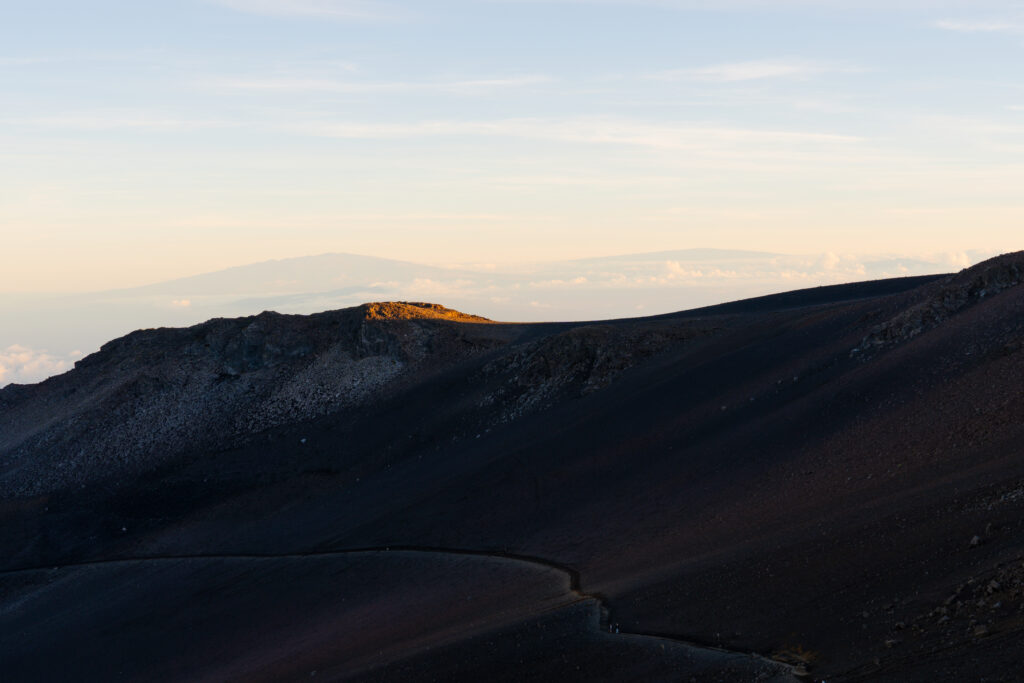
Option 2: Keoneheʻeheʻe — Sliding Sands Trail
Best for: Volcanic scenery and the classic Haleakalā crater experience
Difficulty: Moderate to extremely strenuous depending on distance
Landscape: Cinder desert, volcanic cones, high-elevation wilderness
If Halemauʻu introduces you gently to Haleakalā, Keoneheʻeheʻe drops you straight into its volcanic heart.
The trail begins near the Haleakalā Visitor Center and descends into an enormous landscape of cinder, lava and multicolored puʻu, or volcanic cones.
Even a short hike is worthwhile. The National Park Service suggests descending roughly one mile to a natural overlook for an approximately two-mile round-trip outing. That seemingly easy downhill walk loses about 500 feet of elevation—which, of course, you’ll have to regain on the way back.
One of the botanical highlights is ʻāhinahina, the Haleakalā silversword (Argyroxiphium sandwicense subsp. macrocephalum), an extraordinary plant adapted to the intense sunlight, wind, cold, and dryness of the summit environment. Stay on established trails and give these vulnerable plants plenty of room.
Experienced hikers can continue much farther. The classic route crossing the crater from Keoneheʻeheʻe to Halemauʻu is roughly 11 miles and involves several thousand feet of elevation change. It’s a serious wilderness hike rather than a casual extension of your sunrise outing, and hikers must arrange their own transportation between trailheads.
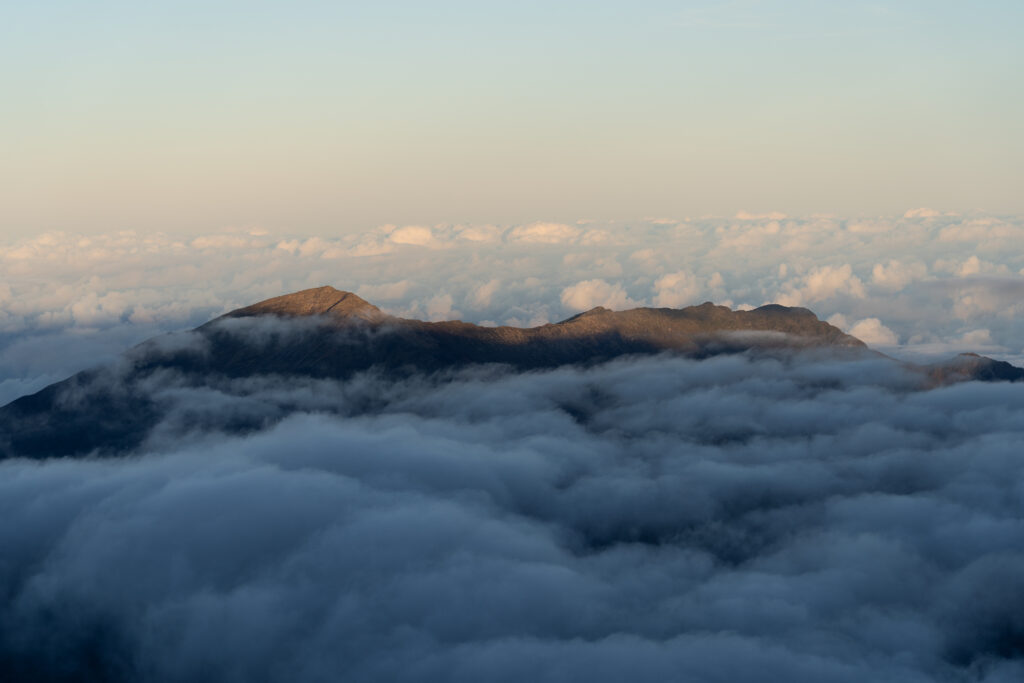
A Word About Haleakalā Sunrise Weather
Don’t let the palm trees at your hotel choose your clothing.
Conditions at Haleakalā’s summit can be wet, windy and below freezing around dawn. There is also no food or gas and minimal clothing for sale inside the park. Bring warm layers, water, food, rain protection, and sun protection—even when the forecast down at the beach looks perfect.
Haleakalā is also a sacred place to Native Hawaiians. Visitors should approach the landscape accordingly, respecting cultural practices and giving people engaged in oli or other traditions the space and quiet they deserve.
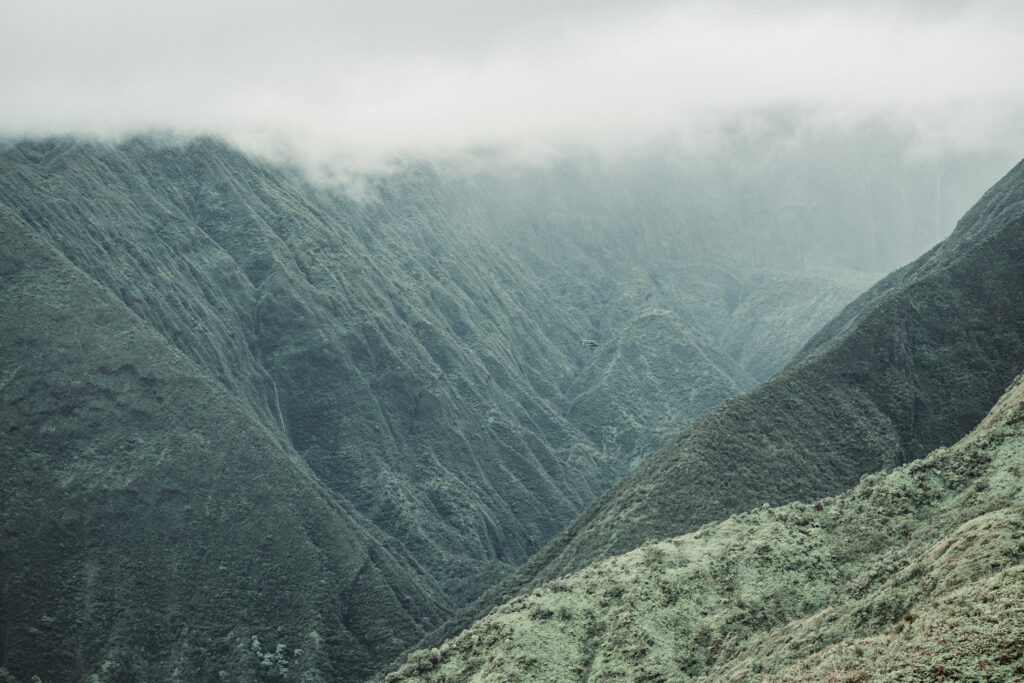
4. Waiheʻe Ridge Trail
Best for: Lush mountain scenery and dramatic ridgeline views
Difficulty: Moderate
Trail length: Approximately 2.5 miles one way
Elevation gain: About 1,500 feet
Landscape: Wet forest, ridges, deep valleys
For an entirely different sunrise experience, head into windward Mauna Kahalawai.
Waiheʻe Ridge Trail climbs from around 1,000 feet in elevation through guava, planted forest, and wet native shrubland before eventually reaching approximately 2,563 feet. Along the way, openings reveal views into Waiheʻe Valley and Makamakaʻole Gulch, with expansive vistas toward Central Maui from higher elevations when conditions cooperate.
This is Maui in GREEN.
Clouds can curl around the ridgeline, moisture collects on leaves, and valleys disappear into steep folds below the trail. When early-morning conditions are clear, watching the first sunlight reach this landscape can be spectacular.
There’s another advantage to starting early: clouds often build around Maui’s mountains as the day progresses. Of course, Waiheʻe makes no guarantees. A perfectly clear morning can become misty surprisingly quickly, and sometimes the clouds are part of the experience.
The trail can also be wet and slippery. Improvements have added drainage and viewing platforms to sections of the route, but this remains a mountain trail in a frequently damp environment.
Don’t be disappointed if your sunrise hike involves a little fog. Watching clouds move through the West Maui Mountains can be every bit as memorable as a perfectly clear horizon.
NOTE: The gate opens at 7:00 AM, so depending on the time of year, this is better considered an early-morning hike rather than a true sunrise hike. Sunrise may occur before the trail is accessible.
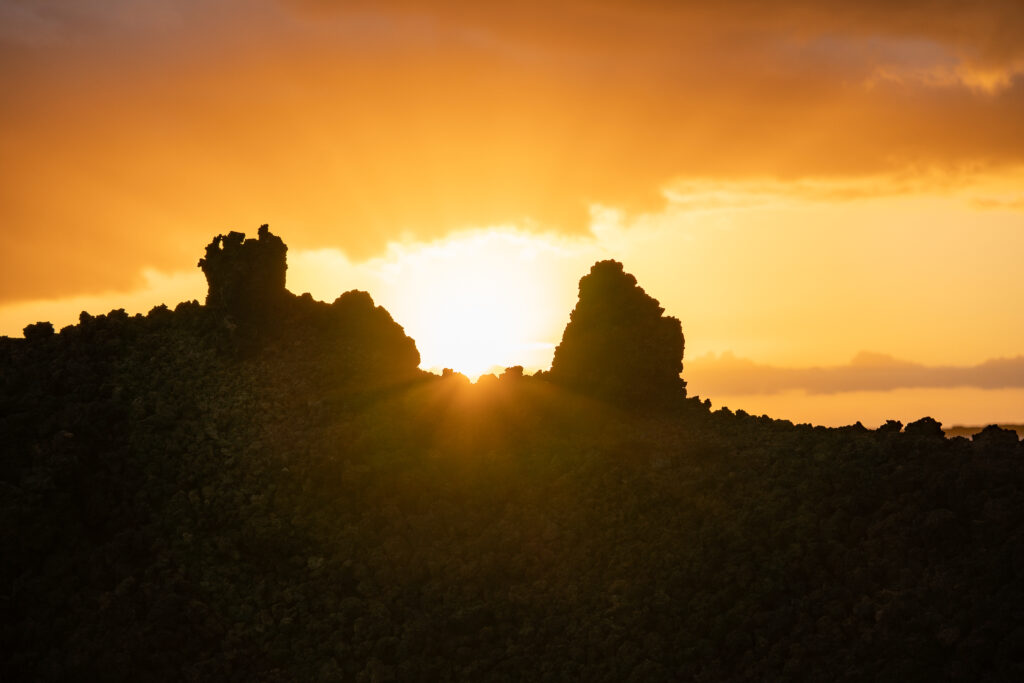
5. Hoapili Trail at La Perouse Bay
Best for: Coastal sunrise, lava landscapes, and Hawaiian history
Difficulty: Difficult for the full route
Trail length: Approximately 5.5 miles for the full trail
Landscape: Lava fields, dry coast, archaeological features
At the end of the road beyond Mākena lies one of Maui’s starkest landscapes.
The Hoapili Trail, often informally associated with La Perouse Bay, begins near Keoneʻōʻio and travels across the rugged lava-covered coast of South Maui.
It’s almost the visual opposite of Waiheʻe Ridge.
Instead of misty forest, expect black lava. Instead of deep green valleys, you get an open horizon and a dry coastline. The official trail description characterizes the terrain as rugged and barren, crossing jagged lava flows with very little vegetation.
That starkness is part of what makes sunrise here so memorable.
As the sun comes up, low-angle light brings out textures that are easy to miss at midday—the ripples, fractures, shadows, and subtle colors in seemingly black lava. Against the blue Pacific, the landscape can feel almost elemental.
The route also carries substantial cultural history. Sections pass old Hawaiian stone walls and house foundations, reminders that this coast is much more than a dramatic geological backdrop. Treat all cultural sites as places to observe respectfully: don’t climb on walls, move rocks, or disturb archaeological features.
The full Hoapili Trail is a significant undertaking, and the lava is notoriously unforgiving on footwear. Sturdy hiking shoes are essential.
For sunrise, many hikers will be happier exploring a shorter out-and-back section rather than committing to the entire route. A big plus here is no entry fee, or gate.

Which Maui Sunrise Hike Should You Choose?
Each of these trails offers a different version of morning on Maui.
Choose Lahaina Pali Trail if you want a challenging climb, sweeping ocean views, and dry West Maui scenery. Closest to Kihei and Ka’anapali.
Choose Halemauʻu Trail if you want Haleakalā’s high-elevation landscape with native vegetation, birdlife, and a flexible turnaround point. Closest to Upcountry/Ha’iku.
Choose Sliding Sands if your priority is getting down into Haleakalā’s surreal volcanic landscape. Closest to Upcountry. Closest to Upcountry/Ha’iku.
Choose Waiheʻe Ridge Trail for lush mountains, deep valleys, and the possibility of watching clouds roll through the West Maui Mountains. Closest to Wailuku.
And choose Hoapili Trail at La Perouse Bay for an exposed coastal walk through lava, history, and some of South Maui’s most austere scenery. Closest to Wailea.
Sunrise Hiking Safety on Maui
A sunrise hike adds one obvious complication: part of your morning happens in the dark. Bring a real headlamp, start conservatively, and don’t count on moonlight or a phone to illuminate rough terrain.
Conditions also vary enormously between these hikes. Haleakalā can be near freezing while the Hoapili and Lahaina Pali trails can become intensely hot after sunrise. Waiheʻe may be slick with rain while South Maui is completely dry.
Before leaving, check current weather, trail conditions, closures, and official access information. Carry enough water, wear appropriate footwear, stay on established trails, and don’t push farther simply because you planned a particular mileage.
Most importantly, remember that sunrise isn’t going anywhere.
If darkness, weather, footing, or visibility makes a trail uncomfortable, there’s no prize for reaching a viewpoint five minutes earlier. Find a safe place, wait for more light, and let the landscape come to you.
The Reward for an Early Alarm
Maui changes quickly in the first hour of daylight.
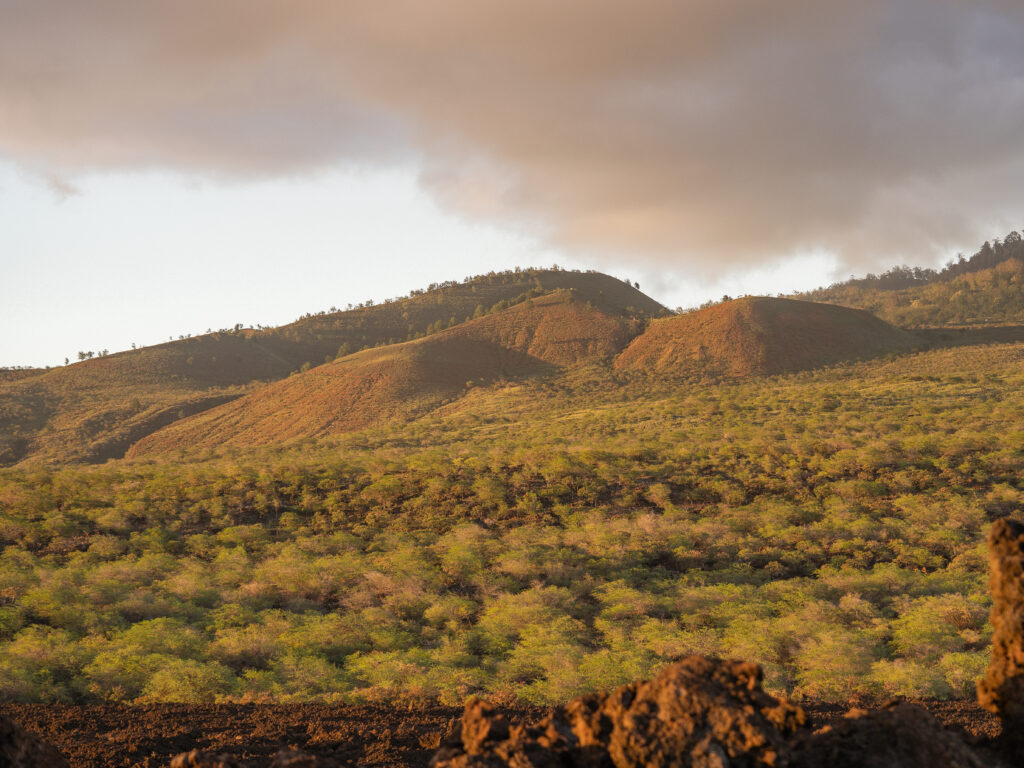
Cinder cones begin to show their reds and rusts. Deep valleys emerge from shadow. Black lava turns surprisingly colorful. Offshore islands sharpen on the horizon. Birds become active, trade winds begin to stir, and a landscape that seemed almost featureless in darkness suddenly becomes complicated and alive.
That’s what makes the best sunrise hikes on Maui different from simply finding a good place to watch the sun come up.
The sunrise is only the opening scene. Early morning on Maui is something you have to experience to fully appreciate.
For visitors who want to understand more of what they’re seeing—from native plants and volcanic geology to the stories held within Maui’s landscapes—exploring with an experienced naturalist guide can add another layer to the experience. Hike Maui’s guided adventures offer another way to get out on the trail and discover just how much there is to notice once daylight arrives.